The Flywheel Effect
Building the Resilient Grid of the Future. (Sponsored Content)
The flywheel effect represents a powerful business model where multiple interconnected actions create a positive feedback loop, driving continuous, accelerating growth.
Amazon's rise to a $2.5-trillion market cap exemplifies this concept perfectly. As customer numbers grew on their platform, more sellers and products were attracted to join, which in turn drew even more customers—creating an ever-accelerating cycle of value and growth.
Today, the electric power industry stands at a similar inflection point. Unlike the traditional linear approach to industry operations, the modern grid is evolving into an integrated ecosystem as electric vehicles (EVs), renewable energy sources, and battery storage systems enable customers to actively participate in grid management.
This industry flywheel begins with customer engagement. As distributed energy resources gain widespread adoption, there are significant variations in both geographical distribution and device types. Treating customers regionwide as a uniform cohort no longer works. Companies must employ hyper-personalized messaging tailored to each customer's unique appliance usage, EV/solar asset ownership, and lifestyle preferences.
By leveraging artificial intelligence (AI), companies can detect who has EVs, solar panels, or inefficient appliances, as well as define energy use patterns for each. This sets the flywheel in motion: delivering exceptional, personalized experiences that foster positive customer relationships and motivate active grid support participation.
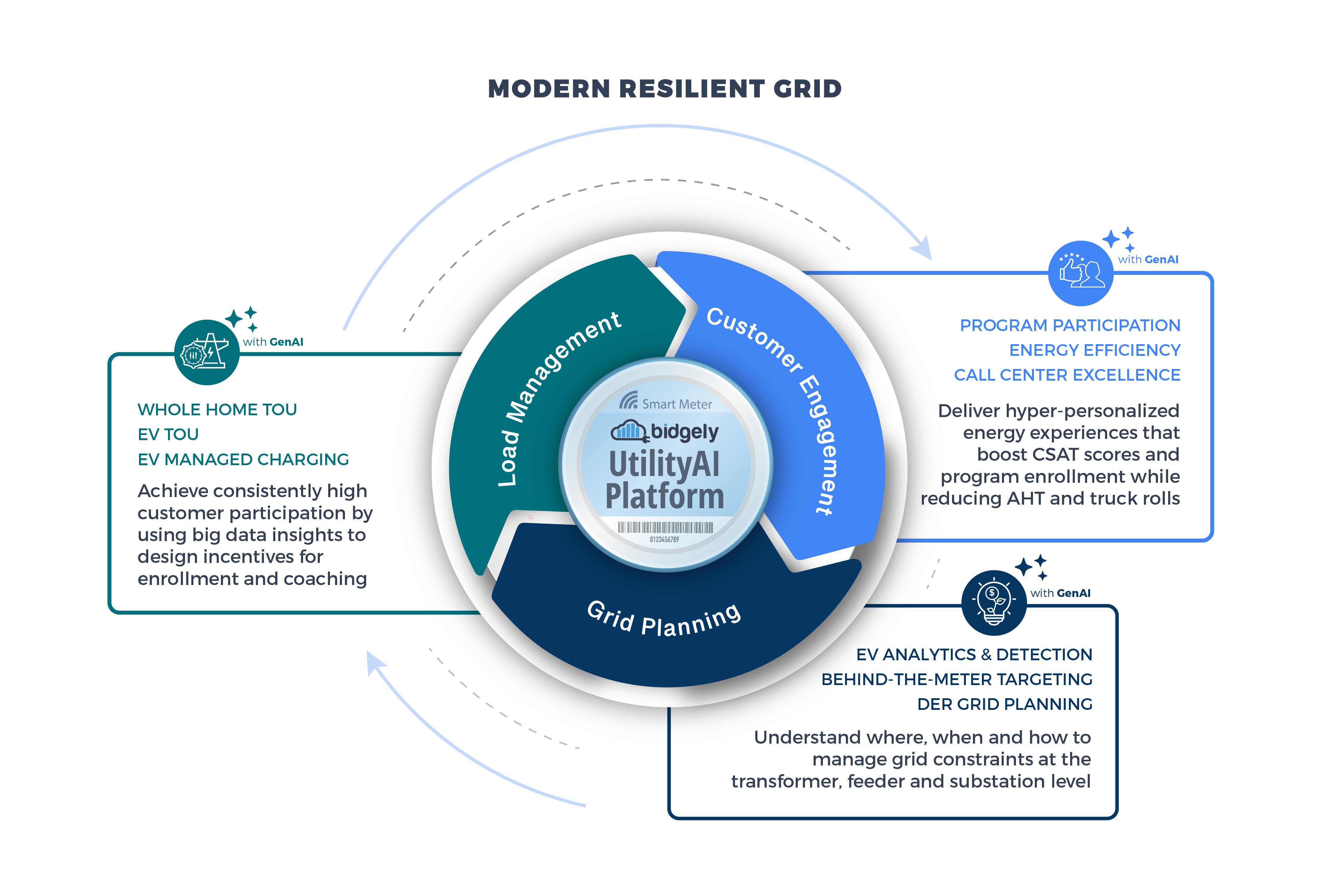
The second part of the flywheel focuses on grid planning. Behind-the-meter customer energy use data provides grid analysts with critical insights into where assets face constraints. AI-enabled platforms can identify which customers own specific devices and their usage patterns, and companies can pinpoint those with the greatest load shaping or shifting potential to alleviate grid constraints.
This leads to the final component: load management. Among the various approaches to manage peak load, load shifting and load shaping prove most effective for addressing long-term grid stability as distributed energy resources scale. With AI-based disaggregation of behind-the-meter data, companies gain access to energy usage by appliance type and consumption patterns, enabling precisely targeted program recruitment.
Because companies have already delivered exceptional, personalized experiences, target customers are primed to become willing participants in demand response programs. This reduces overall energy costs for customers, enhancing their experience and bringing us full circle to the start of the flywheel, where it continues to turn with increasing momentum.
Just as Amazon's flywheel inspired a retail evolution, the energy space is now poised for its own transformative f lywheel transition. Please reach out to continue the conversation.