
Why Permitting Reform Matters for America’s Energy Future
As electric companies work to build the transmission lines and infrastructure needed for reliable energy future, they face complex and often lengthy approval processes. Reforming these processes is essential for electric companies to deliver reliable energy while keeping bills as low as possible for customers.
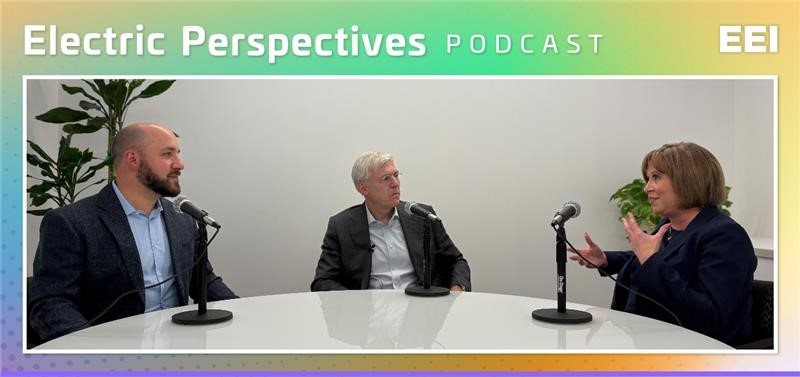
EEI President and CEO Drew Maloney and ITC Holdings Corp. President Krista Tanner joined the Electric Perspectives podcast to discuss permitting reform and how electric companies are meeting rising energy demand while maintaining grid resilience.
Following is an abbreviated transcript, lightly edited for length and clarity. To listen to the full episode and catch up with other recent interviews, visit electricperspectives.com/podcast.
Electric Perspectives (EP): Drew, what is your perspective on permitting reform? How do delays in permitting processes impact projects and increase costs for customers?
Drew Maloney (DM): There's an incredible amount of demand for new energy that we need to meet as quickly as possible, and we need less red tape from Washington and the freedom to build the infrastructure needed to meet this demand.
It can take 6 to 12 years just to get new transmission and generation projects to market. In China, it takes 1 to 3 years. The amount of time these projects take hurts customers and hurts reliability. That's why we're leaning in and supporting permitting reform here.
EP: Krista, what’s your perspective on the permitting challenges that companies are facing today?
Krista Tanner (KT): I couldn't agree more with Drew. We're at a critical time in our country's history. We are in a global race for energy security, AI innovation, and economic development. It takes way too long to build in this country. We had a transmission project take almost 13 years to complete, and that's unacceptable. Drew mentioned China, where they can build by decree. I'm not suggesting we do that. We don't do that in this country. Still, we absolutely can modernize our processes and get this built much faster.
EP: Is the transmission project that you’re referring to the Cardinal-Hickory Creek Transmission Line?
KT: Yes. The Cardinal-Hickory Creek project was approved by the Midcontinent Independent System Operator (MISO) in 2011. It was one of MISO's multi-value projects, which are very aptly named, because they provide economic, reliability, and resilience value. They were groundbreaking at the time.
This project ranged from Dubuque, Iowa to Madison, Wis. It was complex, because we needed approvals from two states and the federal government. It traversed the Upper Mississippi Wildlife Refuge and the Mississippi River.
We had to get 33 permits from 15 different agencies. Some were federal, which required National Environmental Protection Agency (NEPA) reviews. The NEPA process took seven years. We had 29 public engagement opportunities, and those consisted of public information meetings, open houses, and comment periods. We built a very responsible project that spanned more than 90 percent existing rights of way. It was an environmentally responsible way to build a project, and we received approvals because of the way we went about this.
That's when the litigation began. The project was subject to five different lawsuits and four different injunctions. It extended the process even longer. We ultimately prevailed, but it took 13 years, which is way too long. And, while this process dragged on, customers didn’t benefit and were deprived of low-cost energy and a resilient grid.
There were landowners involved in litigation early in the process. By the end, though, it was environmental groups that were not impacted by or were not adjacent to the refuge. They were using the federal process as a way to stop the project.
EP: Drew, you recently wrote a letter to Congressional leadership advocating for permitting reform. What are you advocating for, and why is now the time for Congress to act on this issue?
DM: Krista’s story highlights the challenge that we're facing in America. A project like hers took 13 years, and many other projects throughout the country are having the same results. That is unacceptable today. We will never be able to meet the needs of our customers if this continues.
That's why we sent our letter to Congress, and we called out for several items. One is to streamline NEPA to ensure we don't have this endless litigation.
Two, we need to strengthen and extend the nationwide permitting under the Clean Water Act Section 404, which already is working. We need to codify that and expedite state water quality certifications under the Clean Water Act.
Three, we need to right-size the National Historic Preservation Act, so you can properly balance preservation goals and the deployment of new energy infrastructure.
And, we need to fully fund the U.S. National Laboratories as we work with them to develop new and emerging technologies that provide value across the grid.
The “why now” is very simple: These basic reforms will do several things. They will keep costs to customers as low as possible, they will increase reliability, and they will support the building of new generation and transmission infrastructure that we need to power manufacturing activity, expand small businesses, and develop the technologies that are so critical to the United States.
If you think about a project that was supposed to be completed in 3 years and it takes 13 years, your whole supply chain costs are going to go up. The fact that customers aren't going to receive the benefits for 10 more years means additional costs to them. People don't appreciate how much the delays and litigation impact customers, who get stuck with paying the price for all of this over the long haul.
We are thrilled to know that Secretary Wright actually concurred with the overarching recommendations that we put forward. He has committed to developing an energy workforce strategy that enables effective workforce planning and supports the development of a highly skilled workforce. We're excited to see what comes out of that and we're expecting it to be published this fall.
KT: It’s also very expensive to mobilize and then demobilize crews. And, when you're building a transmission line in sensitive areas, sometimes you can only build during certain times of the year because of environmental habitats. If you get an injunction and then it gets lifted, you still might have to wait months and months before you can start. The issue really compounds upon itself.
EP: From ITC’s perspective, what opportunities do you see to enhance, improve, or streamline the process?
KT: At a high level, we need guardrails around what needs to be reviewed in the NEPA process. Projects that don't cross federal lands are a good place to start. We can narrow the scope of what's reviewed and how we conduct those reviews.
We would also advocate for a “super venue,” or a court that's specialized and understands these processes and can review cases quickly and raise the standard for injunction. Cardinal-Hickory Creek was enjoined four times, yet we ultimately prevailed on the merits. It should not have been stopped at those junctures.
I want to be clear: No one's advocating for the absence of a judicial review. Everyone deserves their day in court. We want to do this the right way. We want to do right by the environment and the communities that we serve. We can do that and modernize and streamline our current system.
EP: Drew, in thinking about permitting reform, how important is it to approach members of Congress and their staff with solutions, not just with problems?
DM: You don't win in Washington without solutions. Our members understand that the most critical thing we can do is provide affordable and reliable power to our customers.
Not only are we working closely with the Administration and with policymakers in state governments and the federal government on permitting reform—we're working on mutual assistance programs, cybersecurity issues, and supply chain challenges. We are offering solutions to all these issues in order to improve the customer experience.
EP: Krista, how do you approach community engagement around a major infrastructure project?
KT: We try to go above and beyond, and we try to engage stakeholders very early in the process to make sure that the route we're selecting has minimal impact. We engage landowners, we engage environmental groups to avoid environmentally sensitive areas, and we engage community leaders, because they're going to hear about the project from their constituents. We don't want them to be surprised.
We also engage our employees and our organized labor friends who are building the projects, because they live and work in these communities, and they're really the trusted resources that their neighbors are going to consult. We try to bring everyone—from employees, to our landowners, to community leaders—on board.
EP: I imagine these projects also have more direct community impacts, in addition to the grid reliability and affordability benefits?
KT: Absolutely. There’s economic development, property taxes, and so many great stories about individuals.
I recently heard a story about a local diner in Montfort, Wis. Like a lot of restaurants post-pandemic, it was slow coming back. But, because of the infusion of the workers who were working on the Cardinal-Hickory Creek line, the diner went from a very slow lunch period to only serving one menu item a day because they couldn't handle the crowd. To go from wondering if your business is going to make it to having so much work that you almost can't handle it is a really great story.
We sometimes forget about the real people and communities who are impacted by this influx of work. The workers may be temporary in some cases, but then you still have a resilient, reliable grid that's going to enable economic development and new projects in your community.
EP: Drew, how do you think about workforce development as you’re engaging here in Washington?
DM: Our industry supports more than 7 million jobs. During the next decade, it's expected that we're going to have to add 30 million new energy workers to our communities. We have partnered with the Center for Energy Workforce Development to raise awareness of this need for skilled workers.
We're working with high schools and colleges to develop curriculums, to educate people, and to highlight the needs that we're going to have. We’ll need everything from lineworkers, to cybersecurity experts, to people who can implement AI technologies, to accountants. We are focused on meeting that need and letting everyone know that our industry provides rewarding and well-paying jobs.
EP: Are you all optimistic about where we are as an industry and the progress that you’re seeing?
DM: I am. We are at a very unique inflection point. We are poised to win the AI race, to bring back more manufacturing jobs to the United States, and to maintain affordability for our customers.
There’s recognition that we must reform our permitting processes, and we’ve seen bipartisan support building on Capitol Hill to address these issues. I'm very optimistic that at some point during the next 12 months, we are going to see progress and hopefully a bill gets passed and makes it to the president's desk.
KT: I agree. This is just too important to get wrong, and we're at a critical time in our history. We've got to win the AI race. We've got to reshore more manufacturing activity. We've got to support all these American jobs, and we can't do it without permitting reform.
I think our leaders know that. As tough as some bipartisan agreements can be, I'm confident that our leaders will rise to the occasion.
The Electric Perspectives podcast discusses the latest trends and issues shaping the electric power industry. Each episode features an interview with guests including executives from EEI and its member companies, government and industry partners, and energy thought leaders and …