
Podcast: Driving Grid Reliability and Innovation
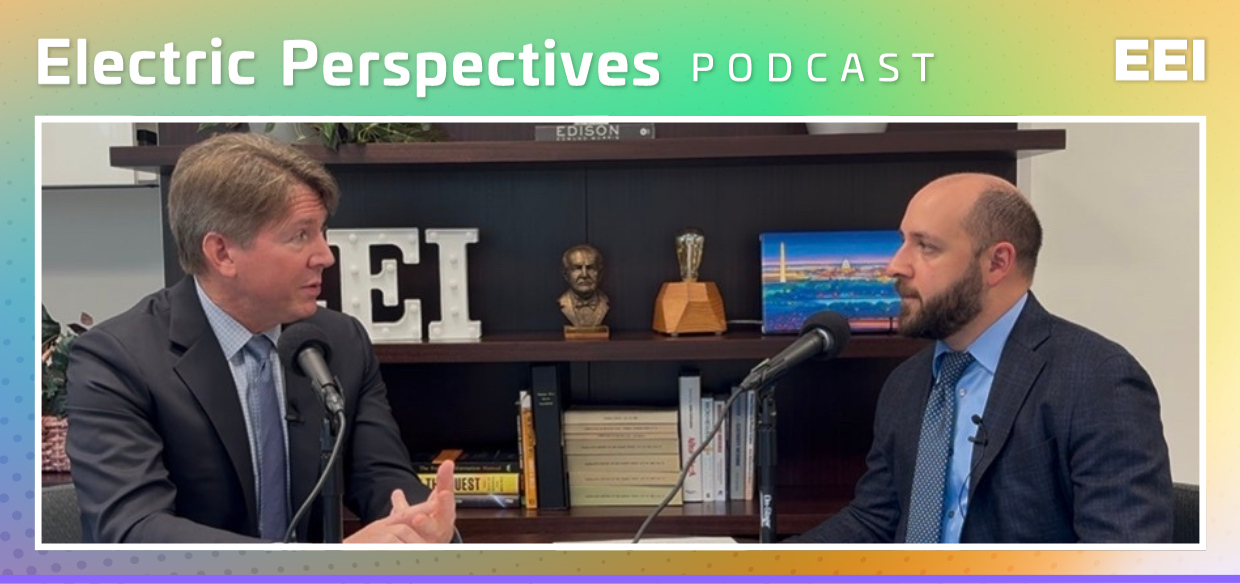
In this episode of Electric Perspectives, Gregory A. Beard, director of the Department of Energy's (DOE's) Office of Energy Dominance Financing (EDF), discusses how the federal government is deploying historic levels of capital to strengthen the energy grid and support long-term reliability. Director Beard outlines EDF’s focus on lowering costs for customers while improving reliability and energy security, including major recent loans to electric companies and a rapid pace of capital deployment.
Following is an abbreviated transcript, lightly edited for length and clarity. To listen to the full episode and catch up with other recent interviews, visit electricperspectives.com/podcast.
Electric Perspectives: How do you align EDF’s financing strategy with grid reliability, security, and customer affordability objectives?
Director Beard: In his first days in office, President Donald Trump declared that we have an energy crisis and an emergency. He chose Secretary Chris Wright to lead the Department of Energy because the policies that Secretary Wright is now deploying are making energy more affordable for the U.S., making the grid more reliable, helping us win AI, and that's giving us energy security—which is national security.
We are really the implementation arm inside EDF. We were appropriated under the Working Families Tax Cut Act—$200 billion to deploy into the market on projects that will, in every case, make energy more affordable for Americans and help bolster the grid, help us win AI, help us keep assets online that would otherwise be decommissioned.
We've already deployed about $60 billion since the Administration has started, so we're off to a fast start. I think we will invest the bulk of our capital even in the next 12 months. In every case, we are super focused on affordability. Every dollar will have that be part of the criteria for deployment.
Electric Perspectives: The recent $26.5-billion Southern Company deal was the largest loan that EDF has made to date. What are your goals as you continue this capital deployment?
Director Beard: Not only was the Southern Company loan the largest loan for EDF: It was the largest loan in U.S. history from the government to the private sector outside of a financial crisis. You can't overstate how seriously this Administration—President Trump and Secretary Wright—take this crisis.
We have hundreds of billions of dollars to deploy to help fix it. We've got about $75 billion left to lend to utilities to help with additional generation, to do reconductoring, to help keep assets online that would otherwise need to be decommissioned. And, we expect to have that capital deployed or committed over the next 12 months.
Electric Perspectives: How is DOE using its financing mechanism to support innovative grid technologies that otherwise may be too risky or cost-prohibitive to advance?
Director Beard: If you look at what's most beneficial to customers, to reconductor an asset or a transmission line might allow for more generation to be available on the grid without the expense of actually having to build new generation. We're very focused on technologies that really impact the rate payer affordability. Of course, we're a loan office. We're not a grant office. We don't want to take technology risk that would be viewed as what I would call “venture debt.”
In many cases, we're lending to in the utility space with customers that are investment grade. To the extent that they want to borrow from us to pursue new technologies while committing their investment-grade balance sheet as a supportive credit mechanism, we would be happy to support that. But, we can't—on a one-off, standalone basis—lend to technology ideas that aren't ready for deployment yet.
Electric Perspectives: So you’re looking at proven technologies, and even things like nuclear energy. How are you thinking about nuclear?
Director Beard: The President and Secretary Wright have been vocal about the need for the United States to be a leader in this space. We have the best capital markets in the world. I think we have the best entrepreneurs in the world focused on fixing this problem, which is why we've seen a lot of activity around capital raising and progress in the SMR space.
The technology that is here today that we want to support—and you'll see a lot of support for out of our office—is in the restart of the large-scale reactor program. We will do this through lending for long-lead-time items, as well as for support for the actual construction of these projects.
There are already more than 10 licensed sites in the United States where there are existing reactors licensed to add additional capacity. I think we will begin to see activity.
My suggestion for any potential interested party in this space would be to look at the support that these projects get in the form of investment tax credit (ITC). It's 30-percent to 50-percent ITC—which means, if you invest a dollar, you get 30-50 cents back. And, you don't get that back once it's complete, you can get it back even during construction.
We believe that the hyperscalers will be willing to lend their balance sheets through in the form of long-term power purchase agreements. We think that'll happen at prices that will make this program and these projects economic for equity investors, for the sponsoring utilities, and beneficial to ratepayers. This is a big push that we're embarking on now, and we think we'll have announcements in the coming months.
Electric Perspectives: It sounds like EDF is approaching this with an effort to de-risk some large-scale investments, making them more attractive for other long-term investors for these really big projects.
Director Beard: Absolutely. Obviously, the industry has said in the nuclear space that they're afraid of being alone. If you build just one copy of anything, it's going to be expensive. The reason why we're embarking on the restart of the program is to help drive those costs down, to make it more competitive with other energy generating technologies.
Electric Perspectives: What sort of timeline have you and your team been aiming for to review and get some of these funds out the door?
Director Beard: We're in a hurry. We cannot have an impact without deploying the capital, so take two potential borrowers. The projects that will have an impact, we will grade it.
The reality of the Southern Company projects is that those ratepayers are saving $7 billion over the life of that loan. Anything that will have a measurable impact, as soon as we can, we want to have involvement and get that capital out.
So, come to us with projects that are ready to go, where the capital can be invested in the next three years, where we can actually measure the impact for the ratepayer. We will be quick, and we will work at the pace of the borrower, which means we can have these loans committed in months—not years.
The last Administration averaged about 18 months from first interest to the closing of a conditional commitment. We aspire to get that down to under six months. We will work at the pace of the borrower, and we're, at this point, repeating many of the same sort of loan documents or using many of the same loan documents. This should not be months of negotiation to get to the finish line for these deals.
My advice for potential borrowers is to read the existing loan documents for the Southern Company deal, for example. And, to the extent that you can accept the terms and conditions that others have agreed to, it'll make the process much faster.
The Electric Perspectives podcast discusses the latest trends and issues shaping the electric power industry. Each episode features an interview with guests including executives from EEI and its member companies, government and industry partners, and energy thought leaders and …