
Investing in Reliability and Customer Experience
In June 2023, Brian X. Tierney assumed his current role as president and CEO of FirstEnergy Corp. He recently spoke with EP to share his thoughts on prioritizing grid resilience, leading a company that serves more than 6 million customers in the Mid-Atlantic and Midwest, and more.
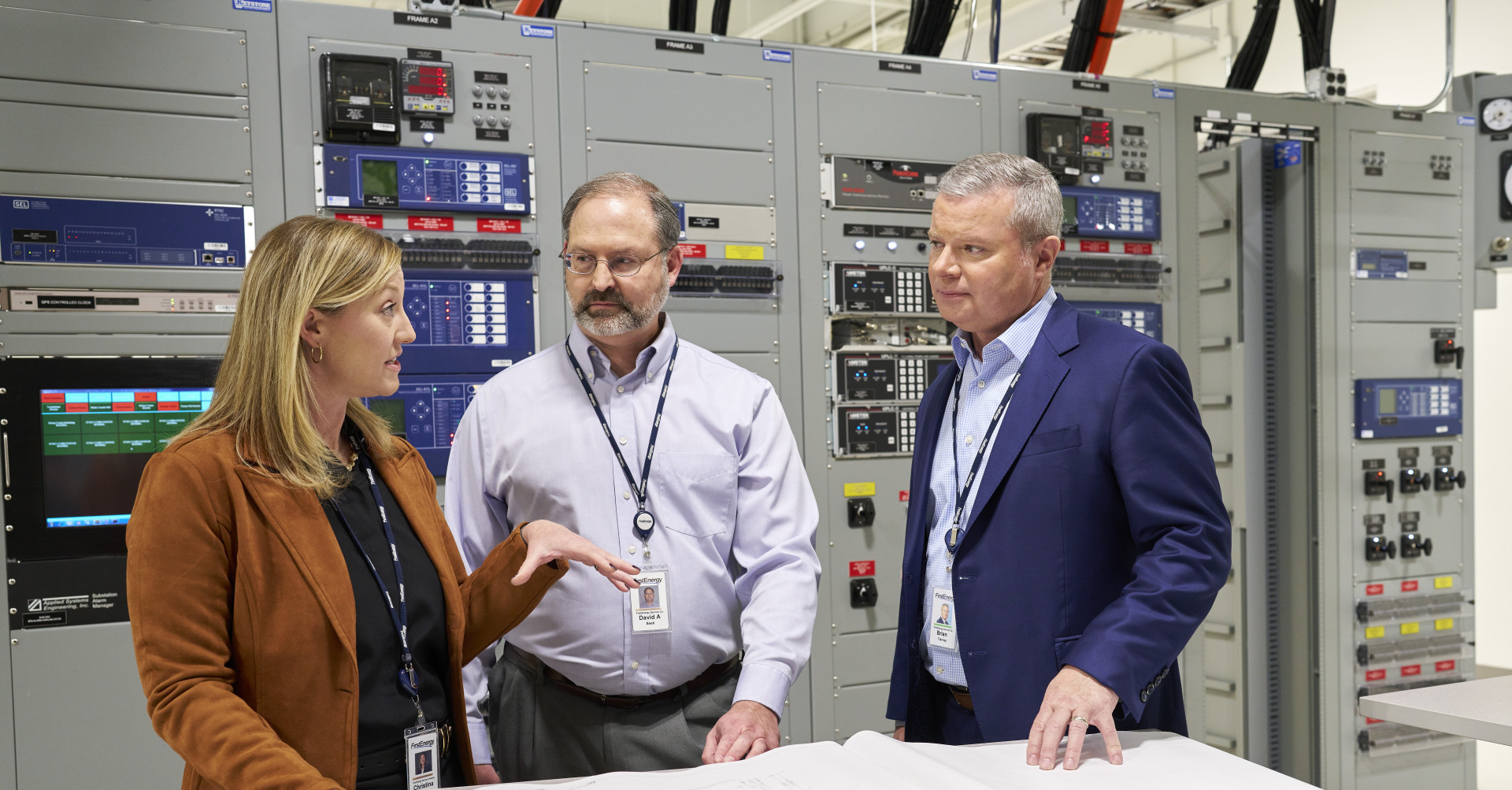
Electric Perspectives (EP): You assumed your role as president and CEO of FirstEnergy a little more than a year ago. What are your main priorities, and what can you say about your experience leading the company?
Brian X. Tierney (BXT): The past year has been fantastic, and I’m more excited than ever to be here. I was drawn to FirstEnergy because the company was at a point in its business and cultural evolution when it could begin tapping into its strengths and realizing its tremendous potential.
FirstEnergy is a fully regulated, mostly wires-based electric company, with a service area that spans parts of five states in the Midwest and mid-Atlantic regions. We just completed the last in a series of transactions that raised $7 billion in equity proceeds to strengthen our balance sheet. That means we now have the financial strength to capitalize on the immense investment opportunities in our regulated businesses for the benefit of our customers. This is a key differentiator for the new FirstEnergy: singular customer focus and a strong balance sheet.
My goal is to help FirstEnergy fulfill that potential and become a premier electric company, characterized by a high-performing culture, an excellent customer experience, strong and consistent financials, and being a trusted community partner.
To get there, we built a simple business model grounded in four components: investing in our people and our system, operating safely and efficiently, recovering prudent investments, and financing our regulated utility operations. When we execute this model effectively, it creates a virtuous cycle that drives great results for everyone who depends on us.
Coming into this job, my priorities were to make sure we have the goals, operating structure, culture, and tools to execute on this model and move the company forward. We’re making progress on every component of our business model, and we’re well on our way.
Exelon’s primary focus is leading the clean energy transformation. While doing that, we are focused on helping our communities become cleaner, healthier, and more equitable places to live and to work. We believe it’s our responsibility to ensure a better future for all. This guides me every day in my work as CEO.
“We believe it's our responsibility to ensure a better future for all.”
EP: Under your leadership, FirstEnergy implemented a new operating structure and established four major verticals: distribution in Pennsylvania and Ohio, integrated operations in New Jersey and West Virginia/Maryland, a standalone transmission business, and FirstEnergy’s central corporate arm. Why did FirstEnergy make these changes, and what benefits does this strategy offer?
BXT: FirstEnergy is trusted to deliver a service that is the lifeblood of our communities. We need to perform this job safely and efficiently in a way that understands, respects, and responds to the individual needs of the customers and communities we serve across our diverse five-state footprint. Energy policies across our service area vary widely, so we need to listen, engage, and work with stakeholders on solutions.
Our entire team needs to understand our collective goals and their role in achieving them. They also need to have a continuous improvement mindset, always looking for opportunities to be more efficient and provide better service.
This requires a lot of two-way communication, and focused, local leadership that is accountable for results. To support this, we’ve shifted more decision-making and operational accountability away from headquarters and closer to our customers, regulators, and employees.
Our restructured leadership allows greater execution at the business-unit level, where we have the best insight into what our customers want and what our employees need to perform at the highest level. We’re already seeing success in everything from storm response to regulatory outcomes.
After changing how we manage the company, we needed to adopt new reporting that reflects that change. With four business units—pure-play distribution, integrated, stand-alone transmission, and corporate/other—individual operating companies are no longer split among the segments. This creates greater simplicity and transparency in reporting, as well as accountability in our management.
The right organizational and operating structure is critical to executing our strategy, so getting this in place was a priority.
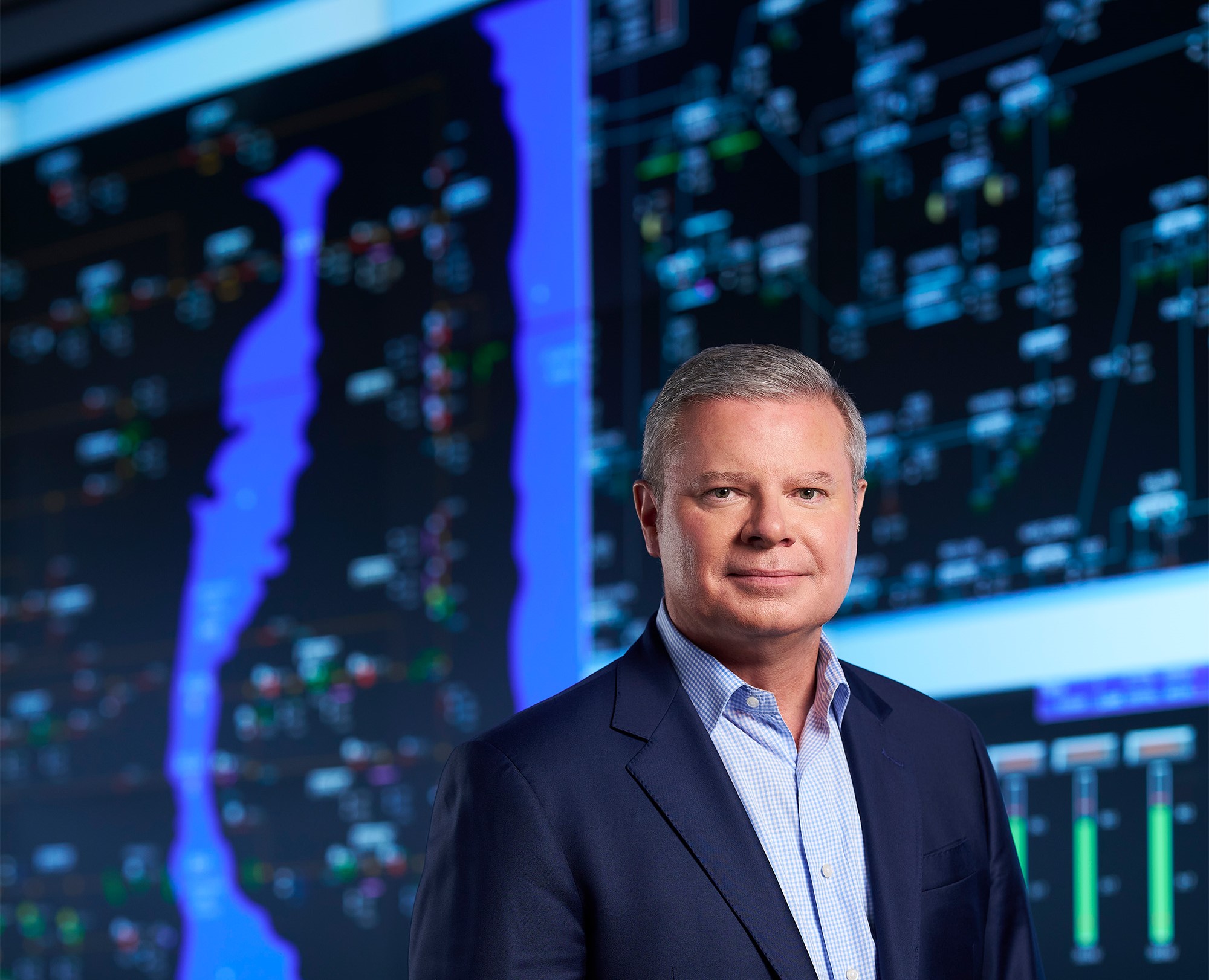
Brian X. Tierney assumed his current position as president and CEO of FirstEnergy in June 2023, helping the company serve as a leader in building America's energy future.
EP: There are several new faces on FirstEnergy's leadership team, filling out the new organizational structure and helping drive the company's transformation. What traits do you look for in your leaders and employees?
BXT: When I joined the company, FirstEnergy was at a pivotal point in its transformation. The scale of change that has been undertaken by ouremployees during recent years has been nothing short of extraordinary. As a result of their work, we're in an incredible position to achieve our goal of becoming a premier electric company.
To accelerate our transformation, we've added 12 new leaders at the executive level since June 2023. It's leadership's job to engage and energize the organization so that all employees are empowered to bring their best. To ensure strong execution in these critical roles, I look for dynamic individuals with deep experience and a continuous improvement mindset. They must demonstrate strong values, the desire to work collaboratively across the organization, and a proven ability to lead organizations through change while driving results.
Like me, our leaders see a unique opportunity to make a positive impact. They're bringing fresh ideas and building a more inclusive culture—focused on performance excellence—that inspires employees and drives results for our customers, communities, and investors.
This is truly a new FirstEnergy. I'm proud of our progress and excited about our future.
EP: You also have overseen FirstEnergy's Energize365 capital investment program, which will see the company invest $26 billion from 2024-2028 to support grid-modernization efforts. What can you share about this initiative and the importance of investing in critical energy infrastructure?
BXT: We hear a consistent and positive message from state commissioners, governors, and other local leaders: They support prudent and impactful infrastructure investments that help meet reliability standards, enhance the customer experience, and advance state energy policies. This aligns perfectly with FirstEnergy’s strategy to invest and operate the system to benefit our customers.
To accomplish this, we leveraged our long-term transmission investment program and strong balance sheet to build our new capital investment program, Energize365. The program expands our customer-focused investments across both the transmission and distribution system to address our customers’ needs, now and in the future. This includes enhancing system reliability and resilience, preparing for demand growth and electrification, improving the customer experience, and supporting connections to clean energy sources—while maintaining a strong affordability position.
The $26 billion in regulated investments between 2024 and 2028 represents a 44-percent increase over our previous five-year plan. Most of these investments are in formula rate programs that provide real-time returns. It includes increasing annual investments in our transmission and distribution system each year, resulting in 9-percent average annual rate base growth and driving returns for investors.
Through Energize365, we’re enabling the transition toward a more sustainable energy landscape. We’re embracing innovation and investing in the new technologies and tools that support the connection of renewables and distributed energy resources. This is being done at the micro level through individual customer connections and at the macro level through projects like building solar facilities in West Virginia and connecting off-shore wind generation to the grid in New Jersey.
Importantly, we have the flexibility to adjust the plan as projects emerge. This includes competitive transmission proposals we’re submitting through the PJM Open Window planning process.
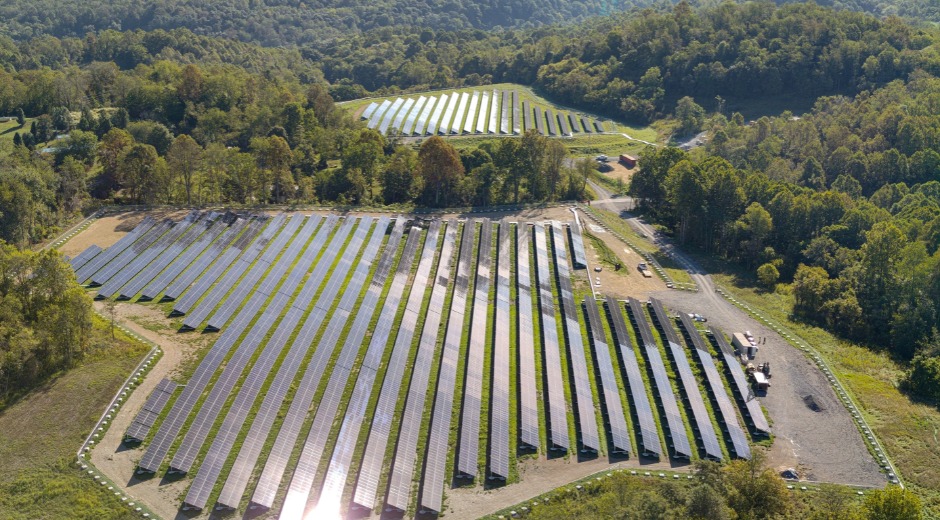
“We’re embracing innovation and investing in the new technologies and tools that support the connection of renewables and distributed energy resources,” says Tierney.
EP: Late last year, FirstEnergy subsidiaries were awarded more than $800 million by PJM Interconnection for transmission projects that will enhance reliability and accommodate demand growth. With data centers and artificial intelligence (AI) applications driving demand growth projections across the country, what are your expectations for demand growth throughout FirstEnergy’s service territory in the years and decades ahead?
BXT: There are forecasts, including from the Boston Consulting Group, predicting that the data center share of U.S. electricity consumption will triple by 2030. That’s a significant percentage of total consumption—equal to the energy use of approximately one-third of U.S. homes.
We can see the impact of AI and data centers coming, and we’re working on many fronts to prepare. This is a complex and challenging issue.
In the Midwest and mid-Atlantic United States, the concentration of data centers and AI applications is steadily growing. We’re seeing interest in our states where we have retired industrial facilities and former power plants. These sites often have existing transmission infrastructure and are very attractive to data centers.
We’re seeing a dramatic increase in the number of inquiries from data center developers. In 2023, we received 18 load study requests for facilities of 500 megawatts or greater. So far this year, we already have received 66 requests for studies of that size. Keep in mind: These developers are assessing many locations, so it’s not as simple as converting inquiries into future demand.
We were awarded about $800 million through PJM Interconnection to support transmission investment opportunities related to data centers in the Northern Virginia panhandle and Maryland. We continue to participate in competitive planning processes, and we certainly see more transmission opportunity for FirstEnergy as grid operators build capacity to enable demand growth.
We plan to update our demand forecast early in 2025 to reflect the activity we’re seeing in our region. While data centers are increasingly contributing to demand growth, our forecast also will reflect more traditional growth trends. Economic drivers like GDP and employment growth have been positive in our footprint, and we’re seeing the impacts of electrification of transportation and the energy transition as we look ahead.
“We're seeing a dramatic increase in the number of inquiries from data center developers.”
EP: You have built a long and impressive career in the electric power industry, at FirstEnergy and previously in leadership roles at Blackstone and at American Electric Power. In your view, how can the industry attract, retain, and develop the workers and leaders it needs to deliver the future of energy?
BXT: Working in the electric power industry isn’t merely a job. It’s a vocation. It powers lives, and it sustains modern living, economic development, and innovation. For those of us in this field, we take this responsibility seriously.
I think this collective mission of providing the lifeblood of electricity to our customers and communities will continue to appeal to great people who are looking to make a difference.
This is extremely meaningful work that can attract the brightest talent. You need to offer a positive culture grounded in safety and integrity. You need to provide competitive compensation. You need to value growth and development. You need to provide both the challenge and the psychological safety that encourages people to stretch themselves with a continuous improvement and reinvention mindset. You need to create and nurture an inclusive workplace.
To help attract new talent, we recently moved away from an unpaid training program for line and substation workers that limited our pool of candidates. Instead, we’ve introduced a new paid apprenticeship program. Through these apprenticeships, new hires learn foundational skills from veteran instructors. They learn in a classroom, in hands-on settings, and they have opportunities to develop relationships with and learn from seasoned employees. They are paid employees who are actively building their human capital.
This will help us attract the workers we need in a competitive labor market and opens up a great career path for a lot of people. It’s great for expanding the diversity of our workforce and hiring from within our communities.
We also have a strong talent pipeline with colleges, universities, and professional and community organizations to help build awareness of careers in the sector. We have a strong co-op and internship program that offers meaningful and challenging work, professional development, mentorship, and networking opportunities to college students in critical fields. In 2023, we converted more than 80 percent of graduating program participants to FirstEnergy employees, which is well above the benchmark of 57 percent reported by the National Association of Colleges and Employers.
To retain talent, we strive to make sure everyone understands and feels the positive impact we have on our customers. Today’s career seekers—particularly young people entering the job market—crave a sense of purpose. And, we’re fortunate in this industry that our work is inherently important.
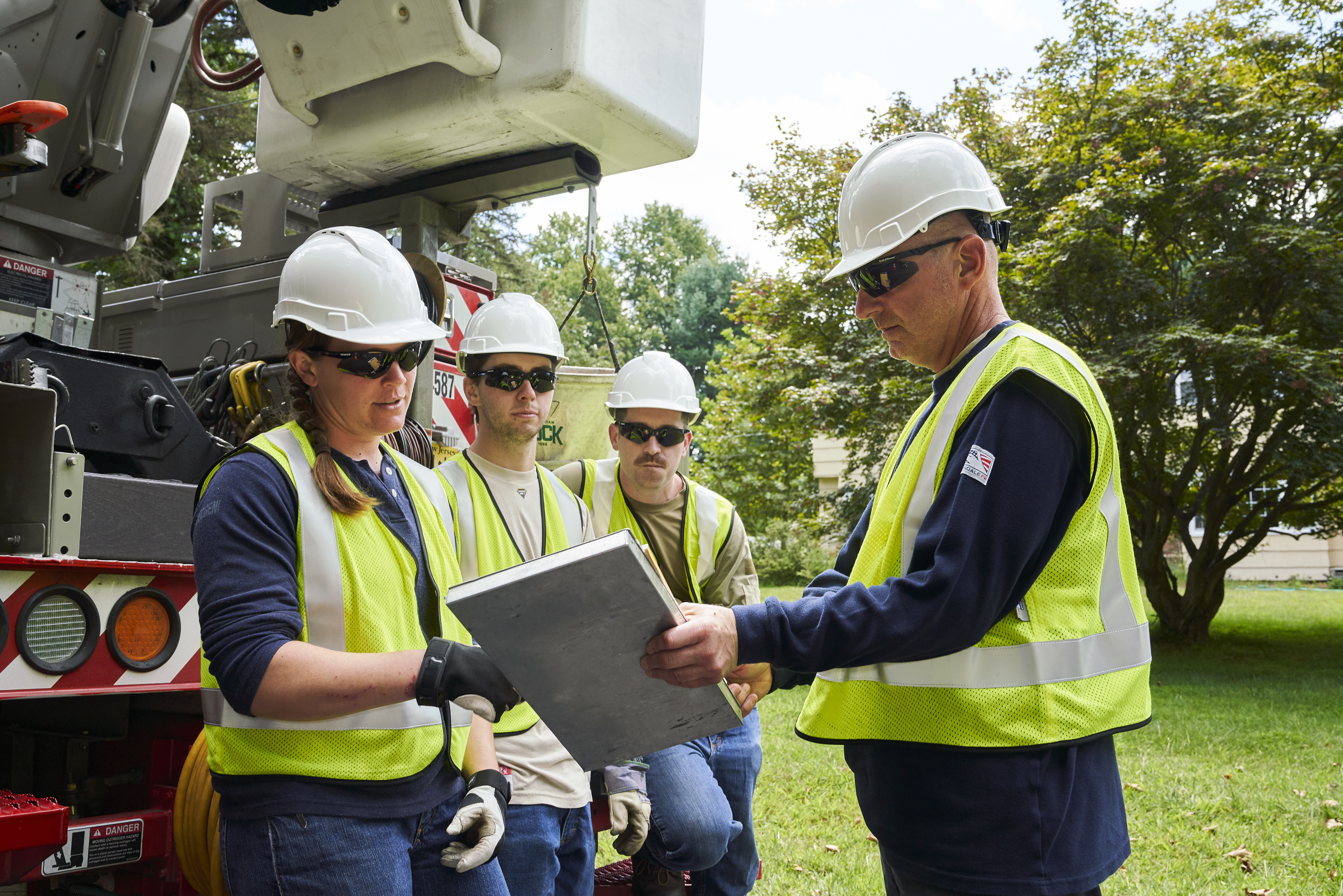
FirstEnergy's paid apprenticeship programs are helping to develop a skilled energy workforce.
EP: Extreme weather events are having a significant impact on the electric power industry across the country. How is FirstEnergy working to prioritize resilience and prepare for and respond to extreme conditions?
BXT: Protecting the energy grid and providing our customers with reliable power is a paramount issue for FirstEnergy and the industry. Constant vigilance for threats to the grid is essential, and we’re focused on advanced technologies and tools to improve reliability, resiliency, and grid security.
For example, thermal imaging cameras and helicopter patrols allow us to proactively identify and repair damaged equipment. Leveraging machine learning, we’re one of the first companies in the industry to build a new Advanced Vegetation Analytics Tool to help predict and reduce tree-related outages.
We’ve also developed and deployed a state-of-the-art modeling tool that helps us predict the scope of impact and prepare for response days ahead of an extreme weather event. It uses machine learning to develop detailed impact forecasts that help us plan our response. Post-event, its capabilities allow it to automatically evaluate its performance, then train itself to improve future outputs.
Hardening the grid is a significant component of our Energize365 investments. Across our system, we’re installing technologies that enhance resilience through automation, take advantage of our data, and increase operational flexibility. These investments provide grid management solutions and security that can reduce the number of outages and minimize the duration and impact of service interruptions—when they do occur.
We’re also thinking proactively about potential long-term threats. The electric system is at an inflection point. With projected load increases outpacing dispatchable generaiton in much of the country, the affordability and reliability of electricity are at risk.
The industry needs to work collaboratively to address this urgent challenge. We’re working with our peers to engage state and federal stakeholders on resource adequacy concerns, and I urge the industry to make it a priority to safeguard reliability and help manage energy costs.
EP: Throughout your career, who have you looked to for advice and inspiration?
BXT: I've been fortunate to learn from many excellent leaders along the way, both in the electric power industry and on Wall Street. One of the values my mentors helped instill is to relentlessly pursue improvement. They encouraged me to listen and seek feedback, to correct course when needed and to adopt new technologies. I’ve found that there are always opportunities to learn and grow.
The service we provide—and the employees who are the heroes of our industry—inspire me to do my best every day. These men and women are called to serve at all hours, in all weather, in an inherently dangerous field, to provide our customers and communities with the service that enables modern living. I like to say that our strategy is simple, but the work is hard. Their passion inspires me to help make their jobs a little easier, serve our customers with the same dedication, and fulfill our commitments to our communities.