Future-Proof Power: Wärtsilä’s Energy Solutions for Electric Companies
With companies seeking scalable, future-ready solutions, Wärtsilä’s RICE technology stands out as a powerful tool for clean, affordable, and reliable energy. (Sponsored Content)

Electric companies are under increasing pressure to deliver clean, reliable, and affordable energy. Wärtsilä’s reciprocating internal combustion engine (RICE) technology offers a flexible, efficient solution to meet these demands—especially as companies integrate more renewable energy onto the grid.
Wärtsilä's RICE plants deliver several advantages: fast startup times, flexible operation across varying power levels, strong part-load efficiency, and grid stability. These features make RICE ideal for balancing intermittent renewables and ensuring power system reliability. Additionally, Wärtsilä’s engines are future-proof, capable of running on hydrogenblended fuels to support decarbonization goals.
Flexibility is key to Wärtsilä’s success. Some companies deploy RICE exclusively; others use it alongside gas turbines to balance renewables. The technology adapts to a wide range of energy profiles, helping companies deliver clean power while keeping costs low for customers.
One standout example is WEC Energy Group, which serves 4.7 million customers across Wisconsin, Illinois, Michigan, and Minnesota. Starting a decade ago, WEC Energy sought modular, quick-start gas plants to enhance their generation fleet. They chose Wärtsilä for its strong global track record, U.S. presence, and proven technology solutions. Today, WEC Energy has 17 Wärtsilä engines in operation, with more planned.
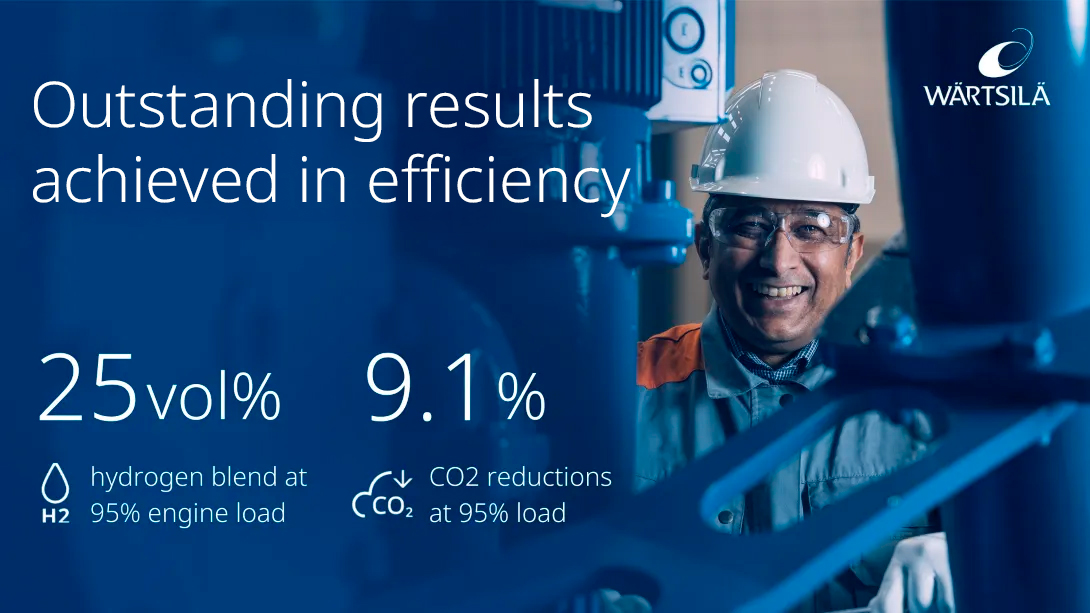
Wärtsilä engines also achieved a major milestone: a successful hydrogen fuel blend test in an existing engine. In collaboration with WEC Energy Group, EPRI, and Burns & McDonnell, Wärtsilä demonstrated that its engines could operate on a 25 volume-percent hydrogen blend without any mechanical modifications. Over three days of testing, the engines maintained high efficiency and reduced greenhouse gas emissions, reaching 95 percent engine load with a 25 volume-percent hydrogen blend and 100 percent load at 17 volume-percent.
“The pilot was a success,” said Dan Krueger, Executive Vice President at WEC Energy Group. “It showed us these engines can run on a 25 percent hydrogen blend without significant efficiency impacts, while also reducing emissions.”
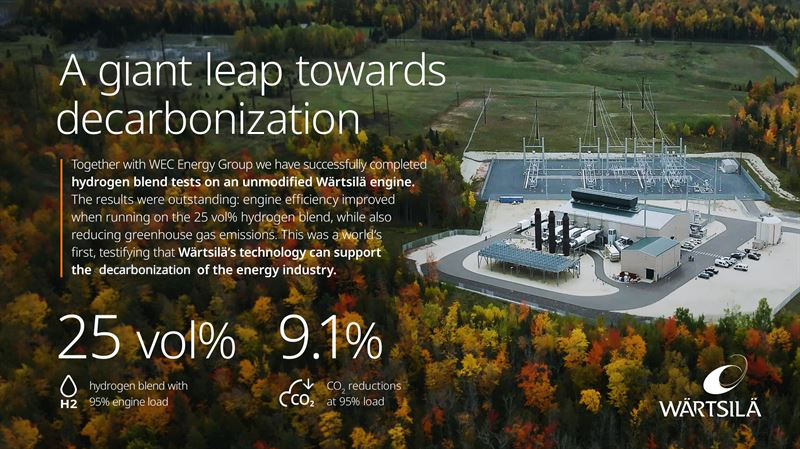
This project marks the first time a commercially operated balancing engine of this size has run on a hydrogen fuel blend and reinforces Wärtsilä’s leadership in hydrogen-ready technology. The company continues research and development efforts toward launching a 100-percent hydrogen-capable engine by 2026.
For WEC Energy Group, Wärtsilä’s flexible, modular, quick-ramping engines are crucial to the company’s energy transformation focused on reliability, affordability, and economic growth. They provide the adaptability needed to navigate rising electricity demand, new environmental regulations, and greater renewable energy integration.
The expansion of energy-intensive industries is one reason why companies are facing demands to add new, cleaner generation capacity quickly. Wärtsilä’s reciprocating engine technology helps address this challenge with relatively fast delivery timelines compared to timelines from gas-turbine manufacturers. These shorter lead times allow companies to bring flexible, reliable generation online faster than traditional large-scale infrastructure projects, helping them respond to demand growth without long delays.
With companies seeking scalable, future-ready solutions, Wärtsilä’s RICE technology stands out as a powerful tool for clean, affordable, and reliable energy.
Watch our video at wartsila.com/hydrogenblend.