
Delivering a Reliable, Secure, and Affordable Energy Future With Pepco Holdings President and CEO Tyler Anthony
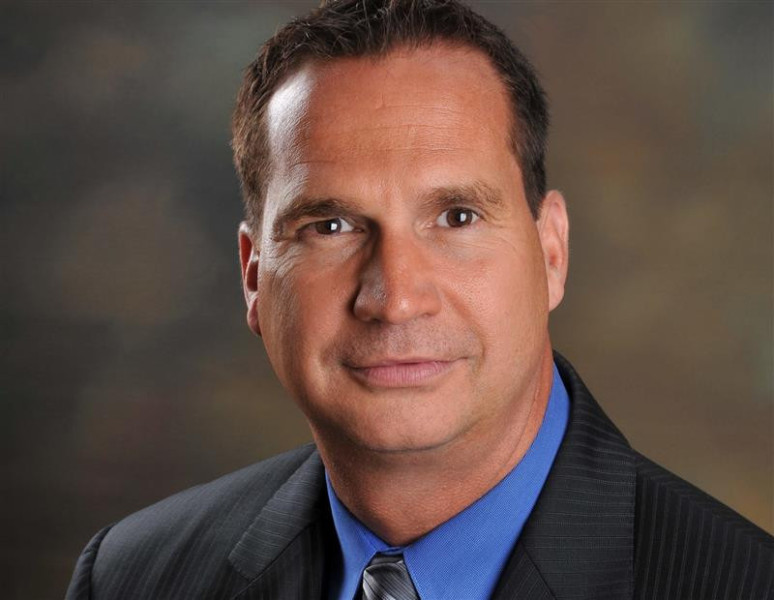 On a recent episode of the Electric Perspectives podcast, Pepco Holdings President and CEO Tyler Anthony discussed Pepco’s ongoing efforts to strengthen the energy grid through infrastructure investments like the Capital Grid Project and how the company is building a workforce that will support the rapid growth of electricity demand from artificial intelligence (AI) and data centers.
Following is an abbreviated writeup of Anthony’s interview with EP, lightly edited for length and clarity. To catch up with other recent interviews, visit electricperspectives.com/podcast.
Electric Perspectives (EP): Tell us a little bit about your background.
Tyler Anthony (TA): I've spent more than three decades in the energy industry, with more than 20 years in nuclear and 15 years on the transmission and distribution side of the business. That perspective has shaped how I approach this role at Pepco Holdings, where we serve more than 2 million customers across Maryland, Delaware, New Jersey, and here in Washington, D.C., including some of the country's most critical government and institutional facilities.
We take that responsibility very seriously at Pepco. It's an honor to serve this area. Our mission is to deliver safe, reliable, and affordable power to these communities, and that includes ensuring continuity for the institutions that keep our region and our nation running.
We're doing all of this at a time when the energy landscape is undergoing, frankly, unprecedented change. In the last five years, we've seen more transformation than we had in the previous 50. From the rapid growth of data centers and electric vehicles to the impacts of climate change and evolving customer expectations, our grid is under more pressure than ever.
At the same time, exciting opportunities are emerging. We're seeing a resurgence of interest in clean, baseload generation like nuclear. I'm looking forward to talking more about how we're responding to surging demand, especially from areas like AI and data centers, how we're investing in grid modernization to prepare for what's ahead, and how we're building the workforce needed to power this transformation in a way that's equitable and lasting.
EP: The rapid growth of AI and data centers is accelerating grid transformation. At the same time, the industry is navigating rising electricity demand and extreme weather events. How is Pepco developing long-term plans to power its communities in the face of all of these sometimes-competing dynamics?
TA: We're at an inflection point. The convergence of AI, data center growth, electrification, and extreme weather is transforming the energy system faster than anything I've seen in my 30-plus years in the industry. As an example, battery storage at scale in the United States is poised to more than double during the next two years and will close out 2026 at nearly 65 gigawatts (GW). When you put that in perspective, it's a rapid rise from the 17 GW in the first quarter projected for 2024. A gigawatt is roughly equivalent to building an entire nuclear power station.
At Pepco, we're focused on energy security as older baseload resources that operate 24/7 retire and new energy resources come online. We've retired all the fossil generation in New Jersey. We've just retired the last fossil plant in Delaware in December of last year. That just means the need for renewables will continue as we build these larger baseload, 24/7 resources.
We also are advocating for market and policy reforms that ensure large-scale users like data centers pay their fair share, and that customers aren't left shouldering the costs of rapid transformation. Both Pepco and Exelon Corporation support co-location of data centers with energy generation. We see that as a key part of the solution, but it has to be done responsibly. We need to ensure that it doesn't drive up costs for residents and small businesses while also helping position the United States to lead in the global race for AI.
This is all about national security. And, it's about striking the right balance between growth and accountability, innovation, and equality. As long as we're working together—electric companies, policymakers, regulators, as well as our partners in labor in our communities—we can solve these issues and continue to advance improvements to the grid. I can't stress enough the importance of partnerships.
This moment calls for urgency but also discipline. We can move fast and still do it the right way.
EP: Can you tell us more about Pepco’s Capital Grid project?
TA: I mentioned the importance of partnerships. The Capital Grid project pulled all of our regional partnerships together to essentially set a foundation with our stakeholders to put a $1.6-billion investment in the future of energy in Washington, D.C.
It's going to serve as a springboard to our long-term strategy to enhance the energy grid. The project was a once-in-a-lifetime opportunity for our employees to work on something that is transformative for our customers, our communities, and our partners. It essentially puts 230 kilovolts 25 feet into the ground across the entire District of Columbia, increasing capacity and replacing aged infrastructure.
The Capital Grid project started in 2016, and we're quickly coming to its conclusion.
EP: Exelon, which is the parent company of Pepco, recently announced a $50-million charitable contribution to help customers in need of financial assistance across its network. Can you tell us about Pepco's role in this program and how it will help customers?
TA: This is one of the reasons I'm so proud to work for Exelon. We spend a great amount of time in our communities, and that builds a level of trust. What we've seen across the different jurisdictions, as supply costs have increased, is that our customers’ bills are increasing.
Exelon and companies like Pepco asked ourselves: What more can we do? How can we be part of the solution? This was a step in that direction—to say to our customers, ‘We're here for you.’ We're part of the broader community. It's very important that we show up when our customers are in need in any way that we can. This is another step in that direction—to build that trust with our community and our customers.
EP: What can you tell us about your focus on ensuring customer bills are as low as possible?
TA: This is probably the top issue facing our industry, facing Exelon, and facing Pepco. We're taking it very seriously. Our relief fund is a big step in the right direction. However, there's a lot more going on behind the scenes as we try to drive costs down.
There are four areas that we're focused on currently. One is reforms on the supply side with the PJM Interconnection, looking at how we keep dispatchable resources affordable and available for customers.
The second is our internal costs, looking at how we keep these as low as possible and get the most out of every dollar we spend.
Third, we're working to educate customers. In our customer portal, customers can get weekly and daily updates on the energy they're using, how it compares over time, and how much they're spending. This keeps them more active, because nobody wants a surprise bill. In Washington, D.C., where temperatures can get close to 100 degrees this time of year, more energy will go toward running air conditioners. We have to keep customers informed and help them manage their energy.
Our fourth and final area of focus relates to our regulators and our partners and includes energy efficiency programs, energy efficiency audits, what we're doing around rate structure for low- to moderate-income customers, the Low Income Home Energy Assistance Program and federal programs, and how we’re connecting all of this to customers.

The Electric Perspectives podcast discusses the latest trends and issues shaping the electric power industry. Each episode features an interview with guests including executives from EEI and its member companies, government and industry partners, and energy thought leaders and experts.