Mileage From Flexible Generation Is Key to Balancing Intermittency
When net demand spikes, Wärtsilä's flexible RICE generation can quickly ramp to the exact output needed and turn off almost instantly when load is served. (Sponsored Content)
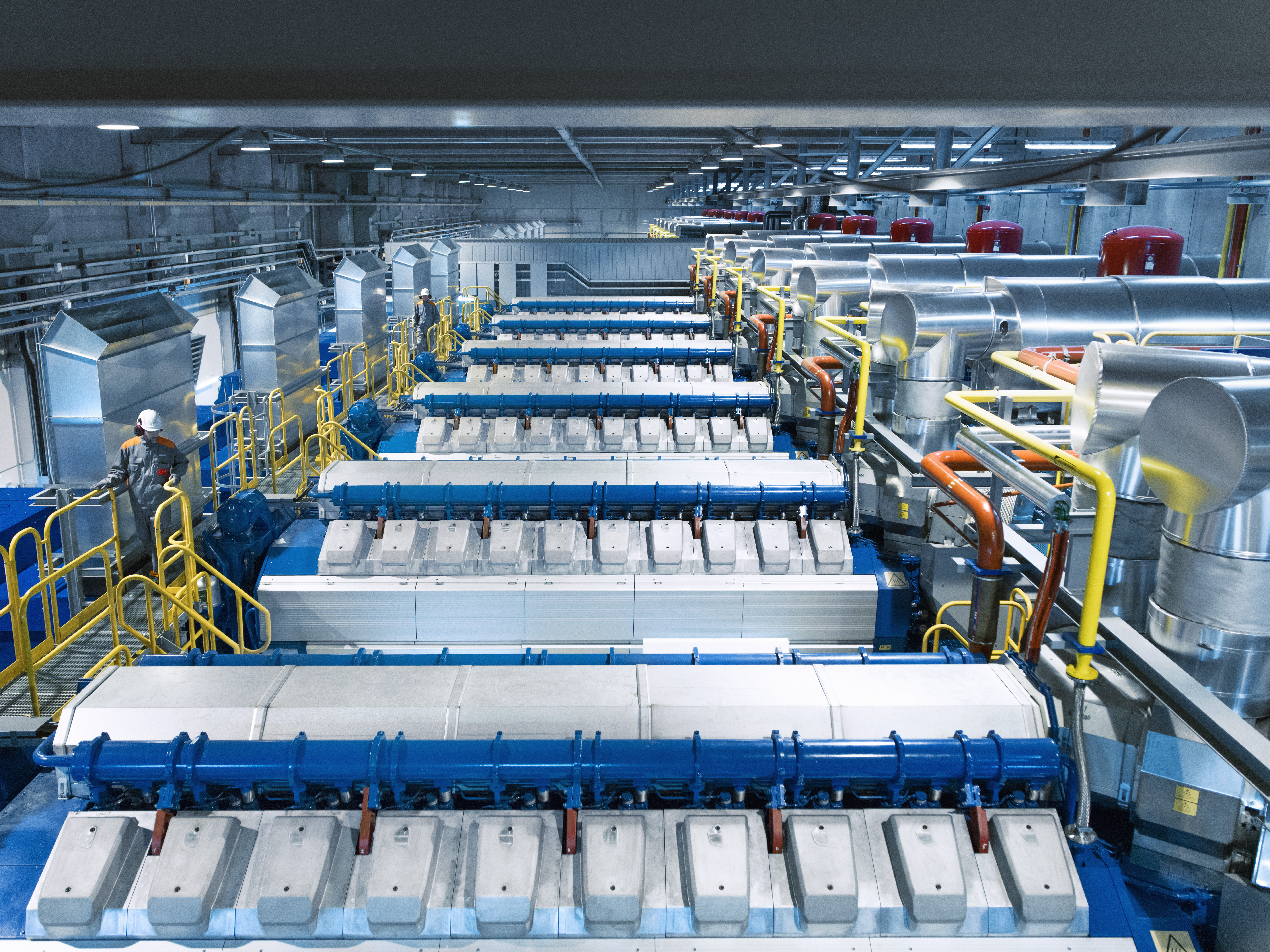
Flexibility refers to a generator's ability to respond to rapid changes in electricity supply or demand. With resource attributes designed for flexibility and fast response, Wärtsilä's reciprocating internal combustion engines (RICE) are the superior choice to maintain reliability and affordability.
Mileage Separates Flexible Technologies From Traditional Dispatchable Generation
Flexible generation, like RICE, can quickly ramp to the exact output needed and quickly turn off when not needed. Inflexible generation—like coal, natural gas boilers, and combined cycles—are limited by slower startups, longer runtimes and downtimes, and higher minimum operating levels. Although these technologies are dispatchable because their output is controllable, they are not flexible enough to respond to minute-by-minute grid intermittency. Just like an odometer measures a car’s movement, a generator's mileage quantifies its total movement over an operating period. When net demand spikes, flexible RICE generation can start up in five minutes, quickly ramp to the exact output needed, and then turn off almost instantly when load is served. When net demand climbs again, Wärtsilä engines can turn back on without any minimum downtime. Since inflexible generators cannot ramp up or down as frequently as flexible generators, they do not provide as much mileage as flexible dispatchable generation.
Flexible Generation Captures Sub-Hourly Value
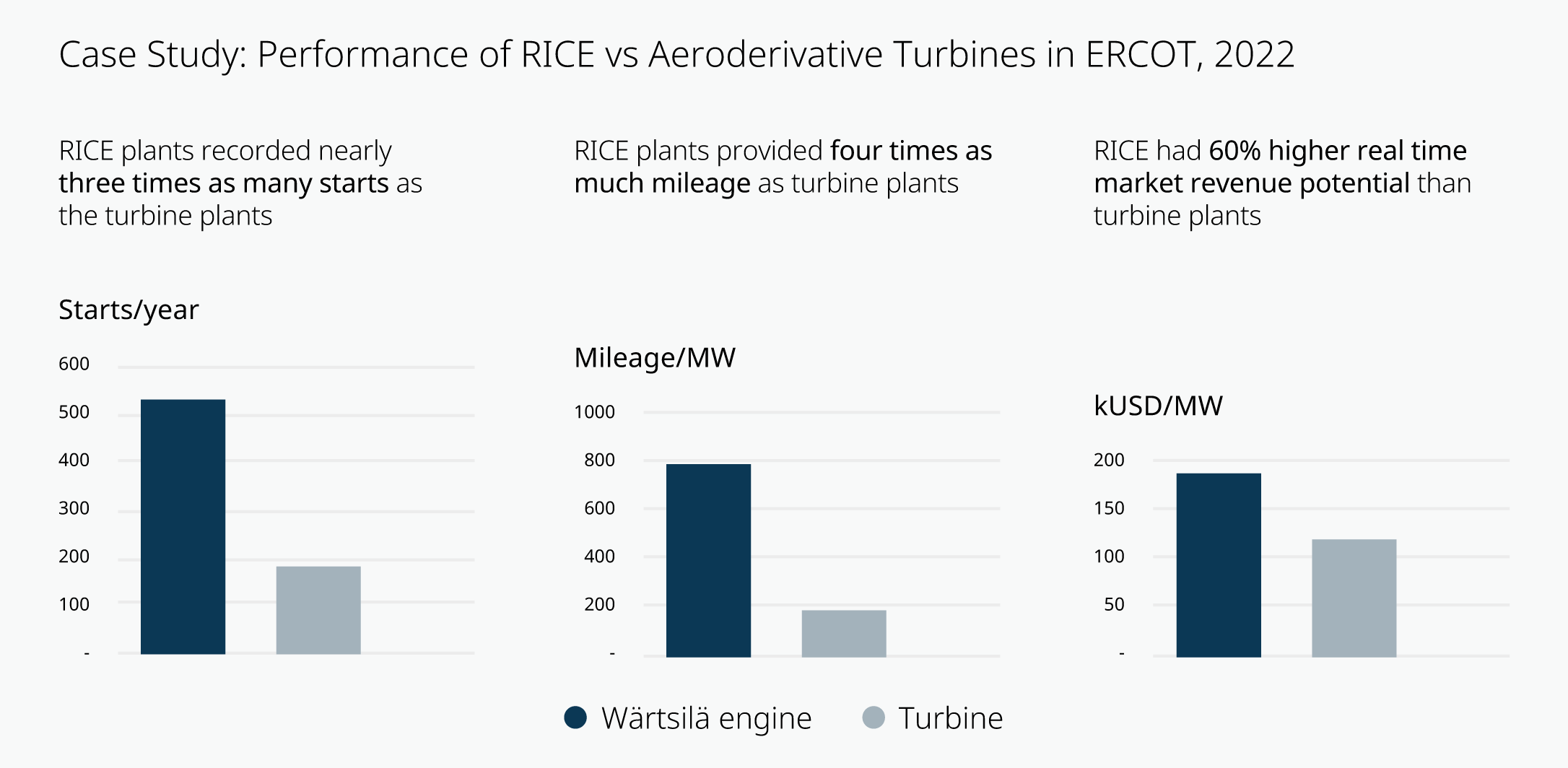
In this example, net load at an Energy Reliability Council of Texas (ERCOT) node rises by 600 megawatts (MW) between Point A and Point C in two hours. During that same period, intrahour variability exceeds 3,500 MW. Both inflexible and flexible generation resources can satisfy the hourly net load at Point A, Point B and Point C, but only flexible RICE generation can track sub-hourly fluctuation and capture untapped value.
Wärtsilä’s Reciprocating Engines Offer Superior Reliability and Value for Utilities
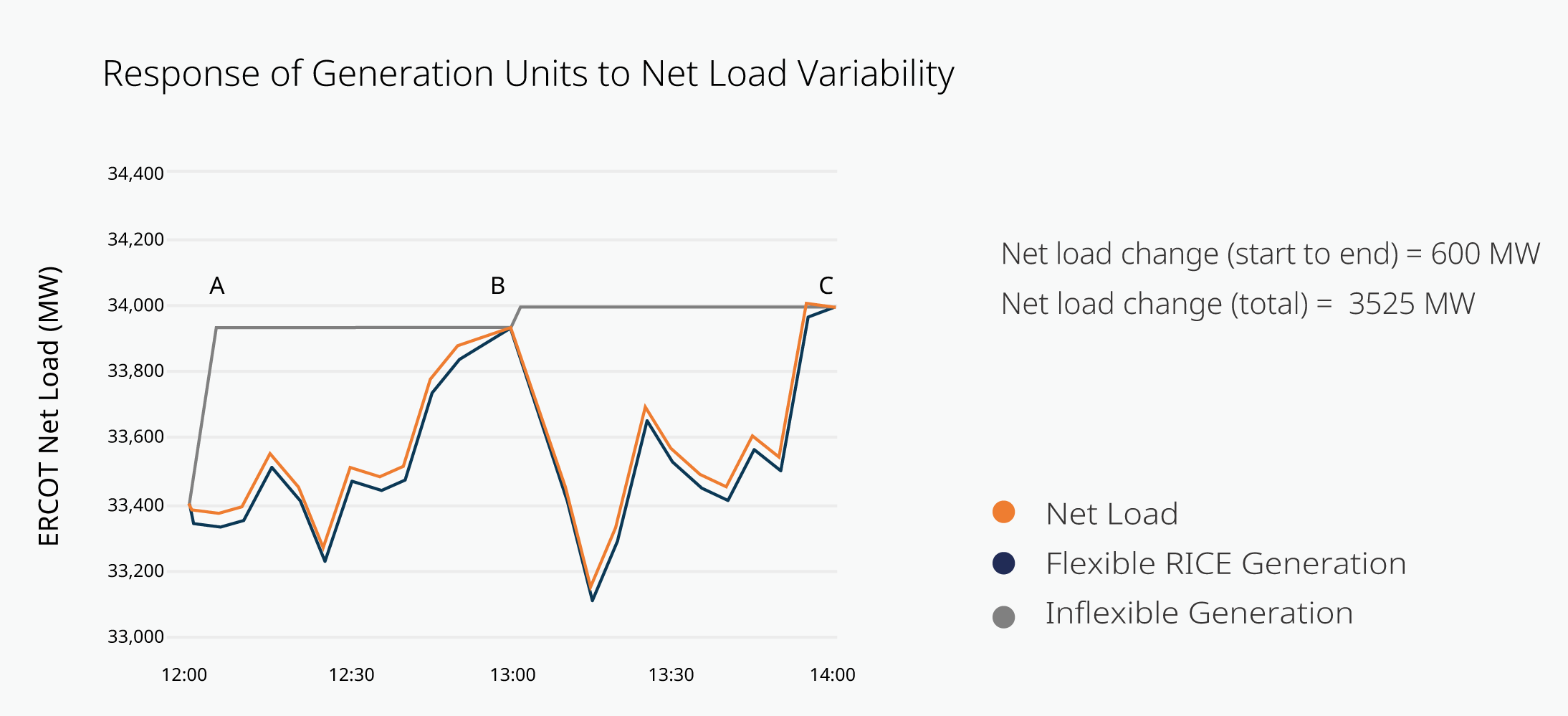
Wärtsilä’s flexible generation outperforms other dispatchable technologies in balancing grid variability. Case Study: Performance of RICE versus Aeroderivative Turbines in ERCOT, 2022:
- RICE plants recorded nearly three times as many starts as the turbine plants.
- RICE plants provided four times as much mileage as turbine plants.
- RICE had 60-percent higher real time market revenue potential than turbine plants.
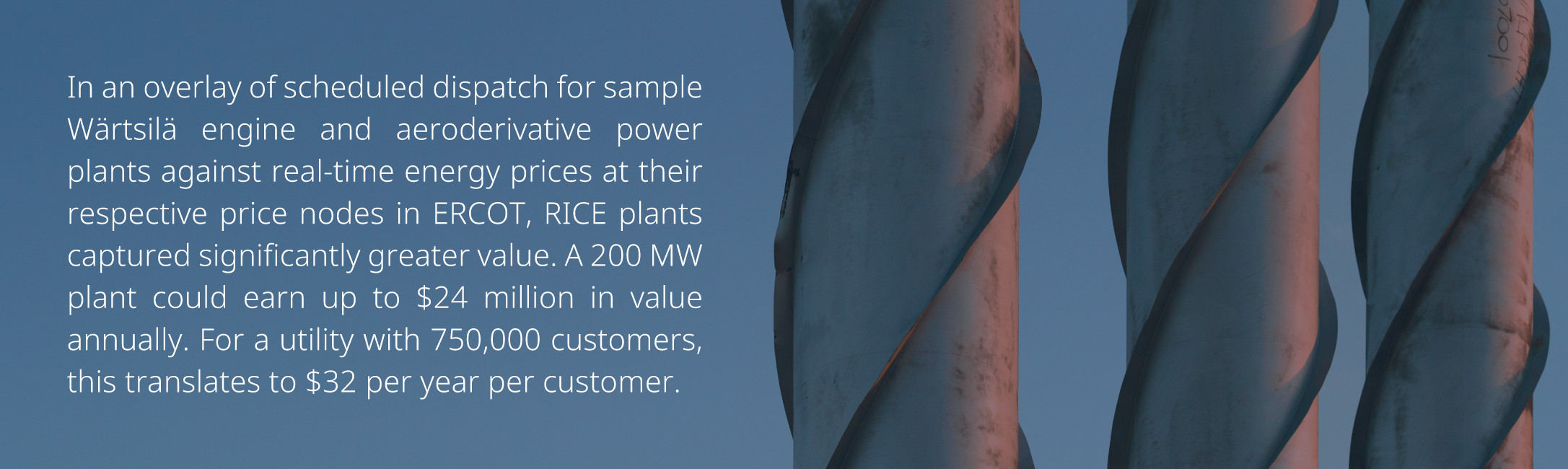
When graded against other dispatchable technologies, Wärtsilä’s flexible generation outperforms.
- Wärtsilä’s RICE technology starts more often than a less flexible peaking technology like aeroderivative turbines.
- Compared to turbines, Wärtsilä engines provide more mileage to address variability.
- Wärtsilä engines offer greater revenue generation and savings opportunities than less flexible turbines.
Visit our website for more information.