
Electric Companies Partner with Tech Companies and Data Center Developers to Drive Benefits in Surrounding Communities
EEI member companies work every day to protect customers and deliver for the communities counting on them.
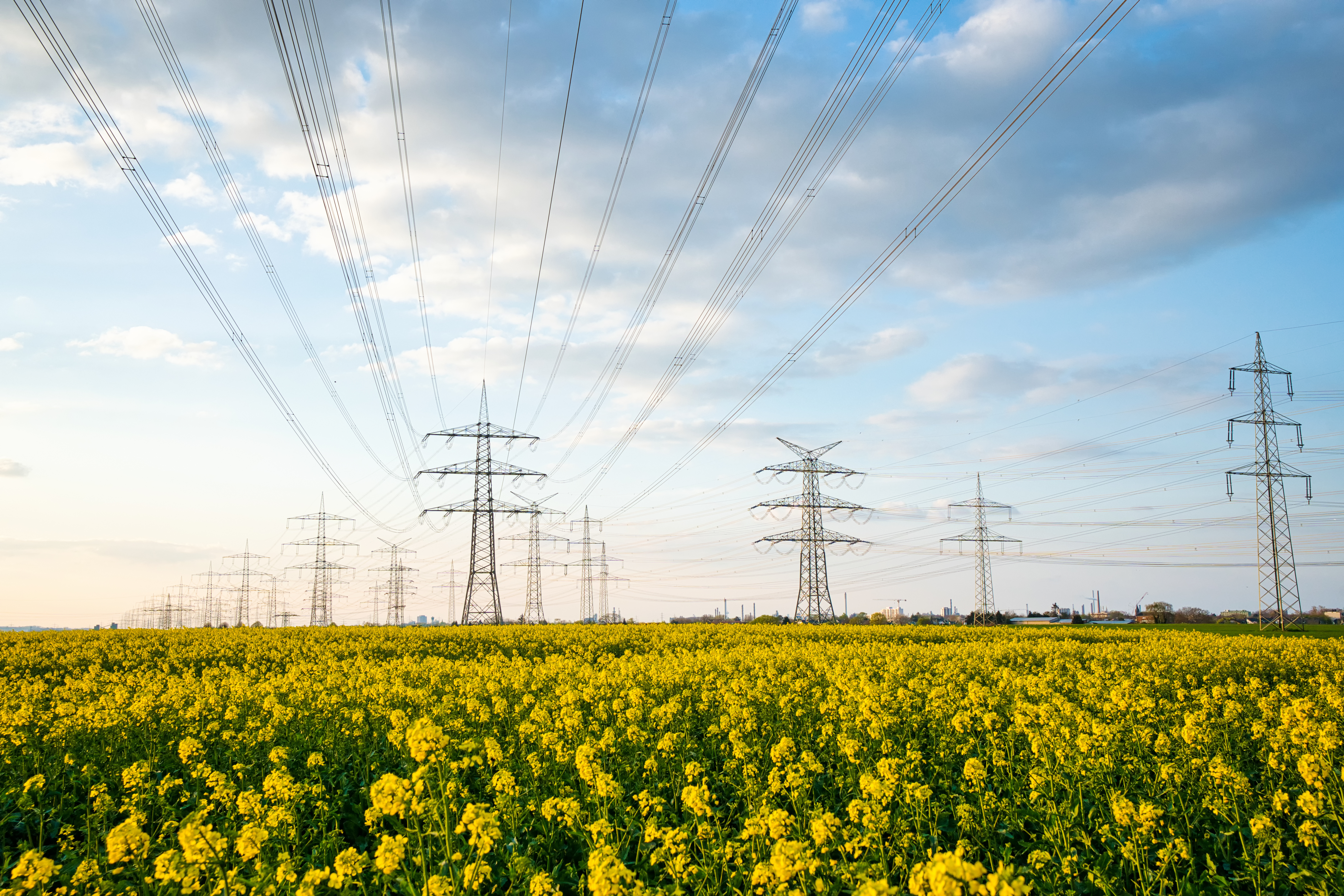
Electricity is having its biggest moment in a generation. After two decades of flat growth, U.S. power demand is climbing at a historic rate, driven by advanced manufacturing, electrification, and load growth from data centers. Even though data centers have captured public attention, their role in America’s energy landscape is nuanced: When connected to the grid, they lower price pressures, drive economic development, and ultimately benefit customers and communities across the country.
Large-load data centers not only help reduce electricity costs for retail customers but also deliver meaningful community benefits through investments in the local areas where they operate. EEI member companies actively work with tech companies and data center developers to strengthen benefits in surrounding communities.
Rate Payer Protection
EEI member companies ensure new customers pay their full cost of service, freezing or even lowering rates for existing customers in the process. This same principle is reflected in the White House Ratepayer Protection Pledge that formalizes an approach electric companies have been executing for years: hyperscalers are responsible for securing their own power supply, funding necessary infrastructure upgrades that benefit everyone, and paying for the capacity they reserve regardless of actual electricity use.
Alliant Energy
Regulators in Wisconsin recently approved We Energies’ Customer Protection Plan, ensuring that the cost of hosting data centers will not affect residential customers. In addition, Wisconsin regulators approved a contract for Alliant Energy to power a Meta data center without impacting residential customers. Alliant Energy is currently in the middle of a five-year rate freeze facilitated by the company’s data center customers.
DTE Energy
DTE Energy announced that, following its latest filing with the Michigan Public Service Commission, it intends to pause requests for electric rate increases for at least 2 years. The decision is driven by growing demand from data centers, with two new data center agreements expected to support nearly $9 billion in grid upgrades funded by large-load customers.
NiSource
In April, NiSource announced a data center agreement with a subsidiary of Alphabet and expanded an existing agreement with Amazon. Under the NIPSCO Generation LLC (GenCo) model, NiSource customers will receive a total of $1.4 billion in savings. The GenCo model ensures residential customers are not impacted by large load customers' new generation and that tech companies pay their fair share of the cost.
“As data center demand continues to grow across our service territory, we are helping to ensure that new large-load customers support the infrastructure needed to serve them while existing customers benefit through bill credits as those customers ramp,” said NiSource President and CEO Lloyd Yates in a statement. “We are proud to support Indiana’s economic development momentum through a model that advances affordability, reliability and long-term growth.”
Southern Company
Georgia Power and Alabama Power announced plans to freeze customer rates due to their work with data centers and large load customers. Alabama Power’s freeze lasts until 2027, while Georgia Power’s freeze runs through 2028.
Investing in Communities
Beyond customer savings, data center partnerships are generating direct, measurable benefits for the communities that host them.
Dominion Energy
In Henrico County, Va., Dominion Energy has collaborated with Virginia’s Local Initiative Support Corporation (LISC) to create the Solar Access Henrico program. This new model helps low-income households install solar systems and lower their electricity bills through a $5 million contribution from the QTS data center.
Since launching in 2025, the program has already helped 96 homeowners in five communities across Virginia install solar systems. Over the next 30 years, these households are expected to save more than $5 million thanks to the solar system.
“County leaders worked with the data center, the developer and the power company on a strategy to allay fears and reduce expenses for residents,” said Executive Director of LISC Virginia Jame Ferrara in a statement. “It helps people protect their homes while also creating more local jobs.”
To qualify, households must earn 80 percent or less of the area median income, or up to $90,800 for a family of four in the greater Richmond area that includes Henrico County. Installation runs approximately $20,000 per home and includes a 20-year warranty.
Entergy
Entergy’s recent partnership with Meta is expected to deliver $2 billion in savings to Entergy Louisiana customers over the next 20 years, while also giving back to local educators. Increased tax revenues from Meta’s data center project have recently enabled Richland Parish teachers to receive annual bonuses of up to $50,000. The annual bonuses are 400% higher than the previous year.
“It’s life-altering for our teachers and their families, and it’s transforming our schools,” said Superintendent of the Richland Parish School District Sheldon Jones in a statement. “Meta’s investment has made Richland Parish a destination for education as well as industry,” Jones explained.
What secures the grid and keeps our customers safe today will not remain static, and it is through programs like STEP that we plan and prepare for evolving threats to our grid and our …
Bringing Jobs
Data centers also create new opportunities for workers, local businesses, and regional economies.
Dominion Energy
Through the partnership among QTS data centers, Dominion Energy, and LISC, the solar panel model is not only designed to reduce utility costs, but also to support local jobs. These jobs include local solar installations and clean-energy opportunities.
“This program is offering proof of concept for the larger idea that solar and efficiency funding can address the larger housing and energy affordability challenges, while also creating jobs in partnership with utilities and major data firms,” said LISC Senior Vice President John Moon in a statement.
Duke Energy
Duke Energy has partnered with Amazon to power the AWS data center in Richmond County, NC. Amazon’s data center brings 2,000 temporary jobs to the area and 500 permanent roles. Additionally, Amazon has partnered with Richmond Community College to provide students with information about data center careers and pathways to enter the field. This initiative is designed to help local residents gain the skills and qualifications needed to secure higher-paying jobs within the data center sector.
Entergy
Meta’s partnership with Entergy Louisiana will create 1,000 jobs in a community of 20,000 people once operational. Louisiana Delta Community College is receiving a $5 million donation from Meta to create scholarships to train residents for data center jobs. Additional benefits include Louisiana local businesses receiving over $1.6 billion in contracts from Meta since construction began in 2024.
Meta also provides training to local small businesses in Louisiana and invests in programs connecting businesses and workers to opportunities at the data center site. This includes developing subcontracting partnerships that support workforce development opportunities through local colleges and universities.
Furthermore, thanks to the increased bonuses for teachers in Richland Parish, Superintendent Jones says this is the first time in his 30-year career that every teacher who interviewed was fully certified. Higher bonuses attract better educators, and Jones is confident that if the Richland Parish School District attracts the best teachers, they will become the best school district in the region.
Research Shows Data Centers Benefit Communities
An increasing number of studies, including those from the Electric Power Research Institute (EPRI), Columbia University's Center on Global Energy Policy, Lawrence Berkeley National Laboratory, and Charles River Associates, reach a similar conclusion about data centers. Research suggests that data centers typically exert downward pressure on electricity rates and benefit existing customers.
For example, a study conducted by EPRI found that the increase in the number of data centers from 2015 to 2024 led to a 4 percent decline in retail electricity prices. In addition, the Lawrence Berkeley study found that state-level load growth was associated with a decline in average retail electricity prices across most states from 2019 to 2025.
This system will only work if “fair share agreements,” or large-load tariffs, ensure that new customers on the grid pay their full cost of service. Across our member companies, large customer partnerships are being established to deliver real, quantifiable benefits back to existing customers.