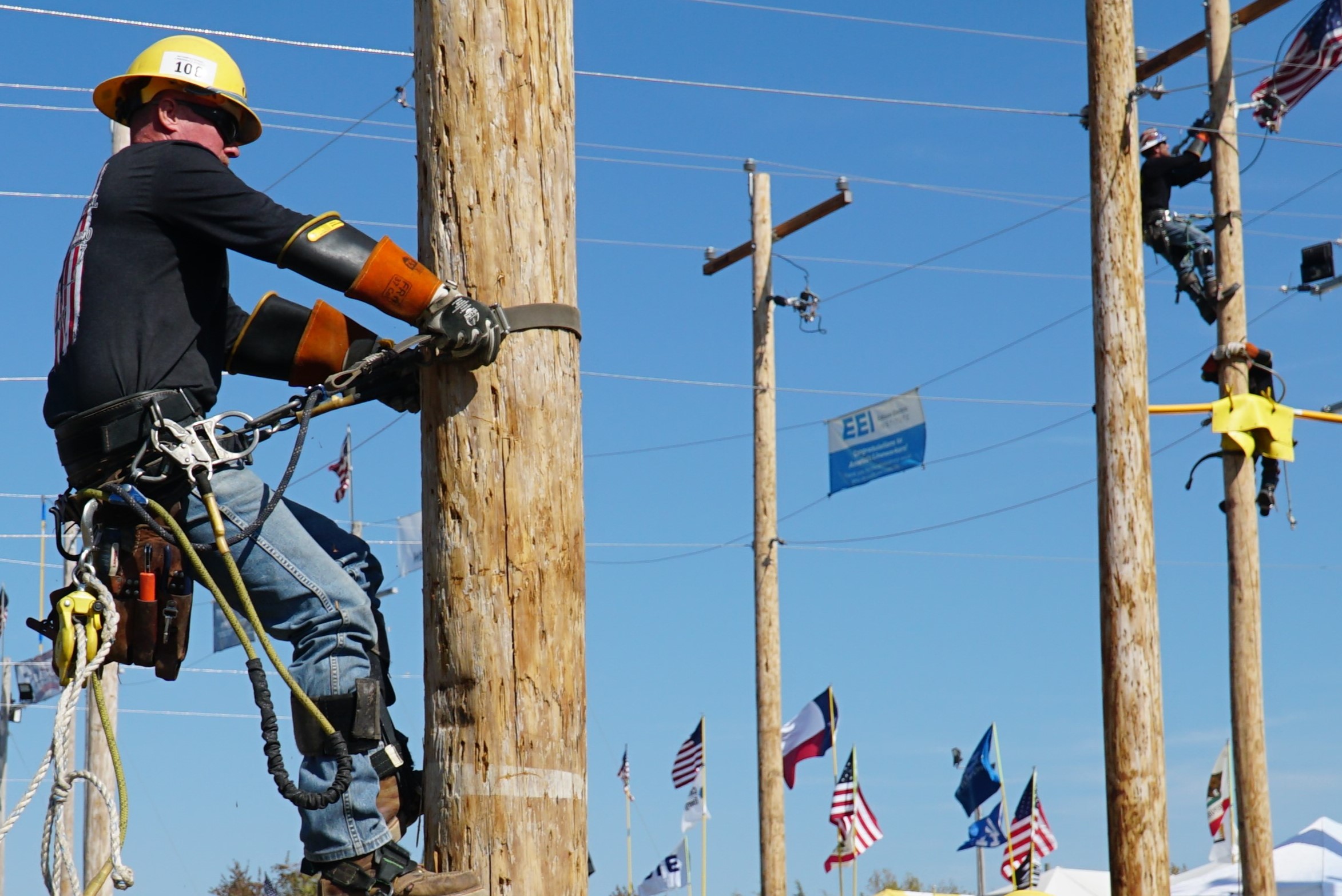
Highlights From the 40th Annual International Lineman’s Rodeo
Hundreds of the most skilled lineworkers in the world traveled to Kansas City. Mo., to compete in a series of skills challenges and celebrate the camaraderie and service that's foundational to their line of work.
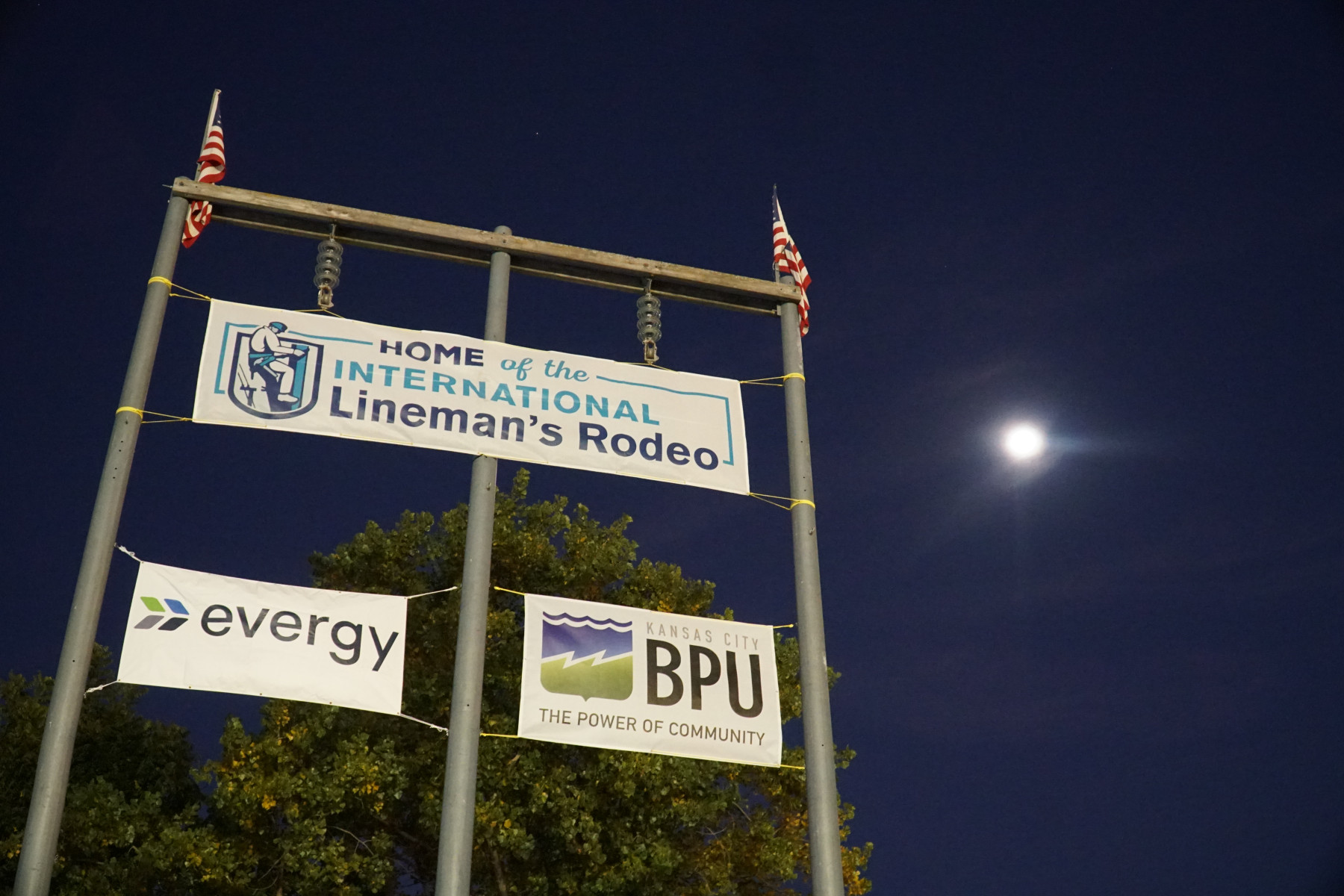
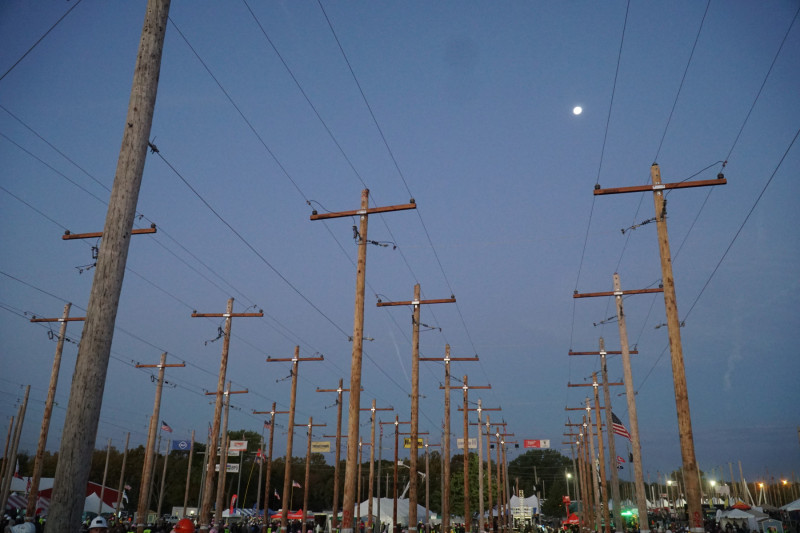
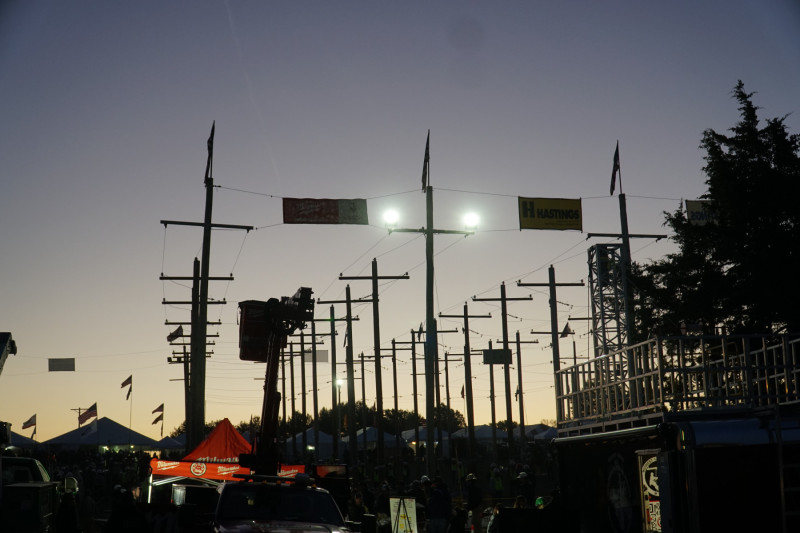
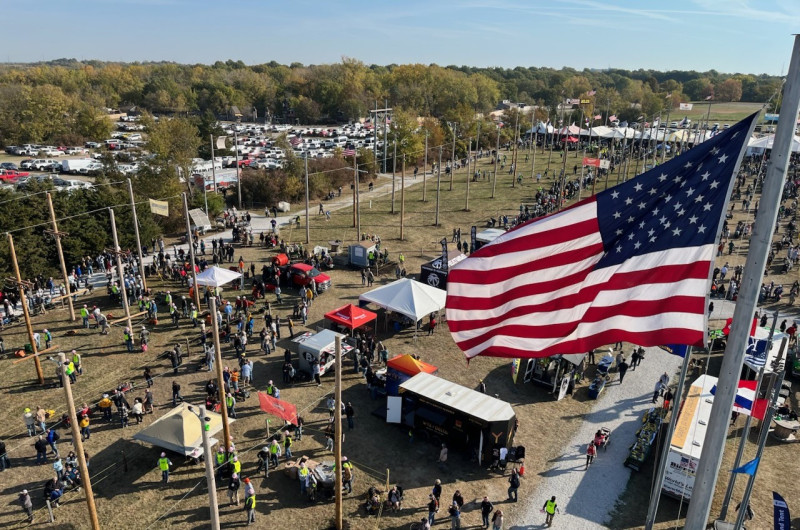
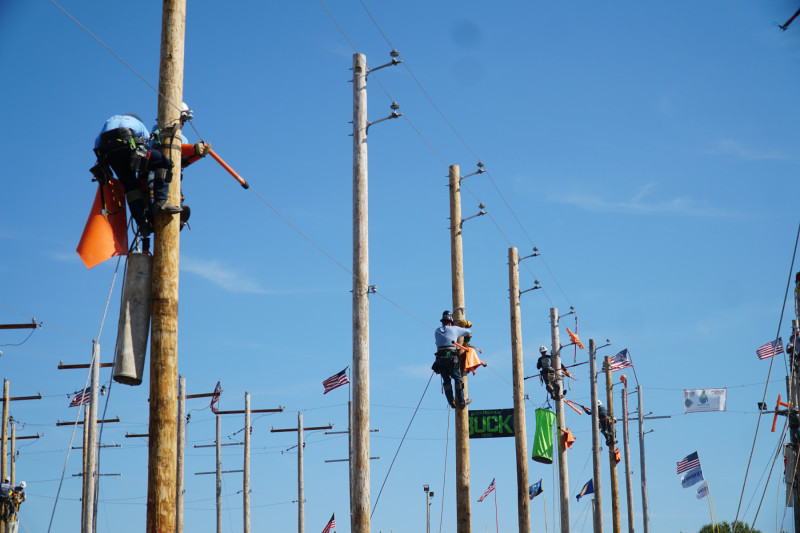
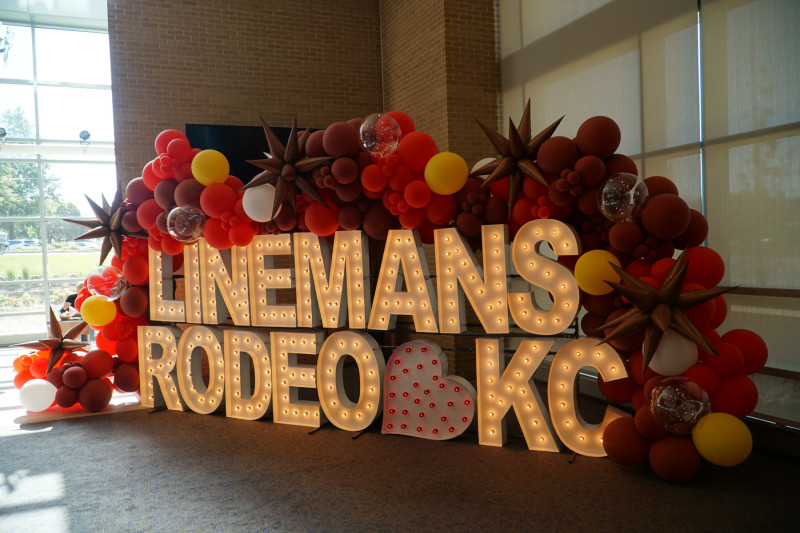
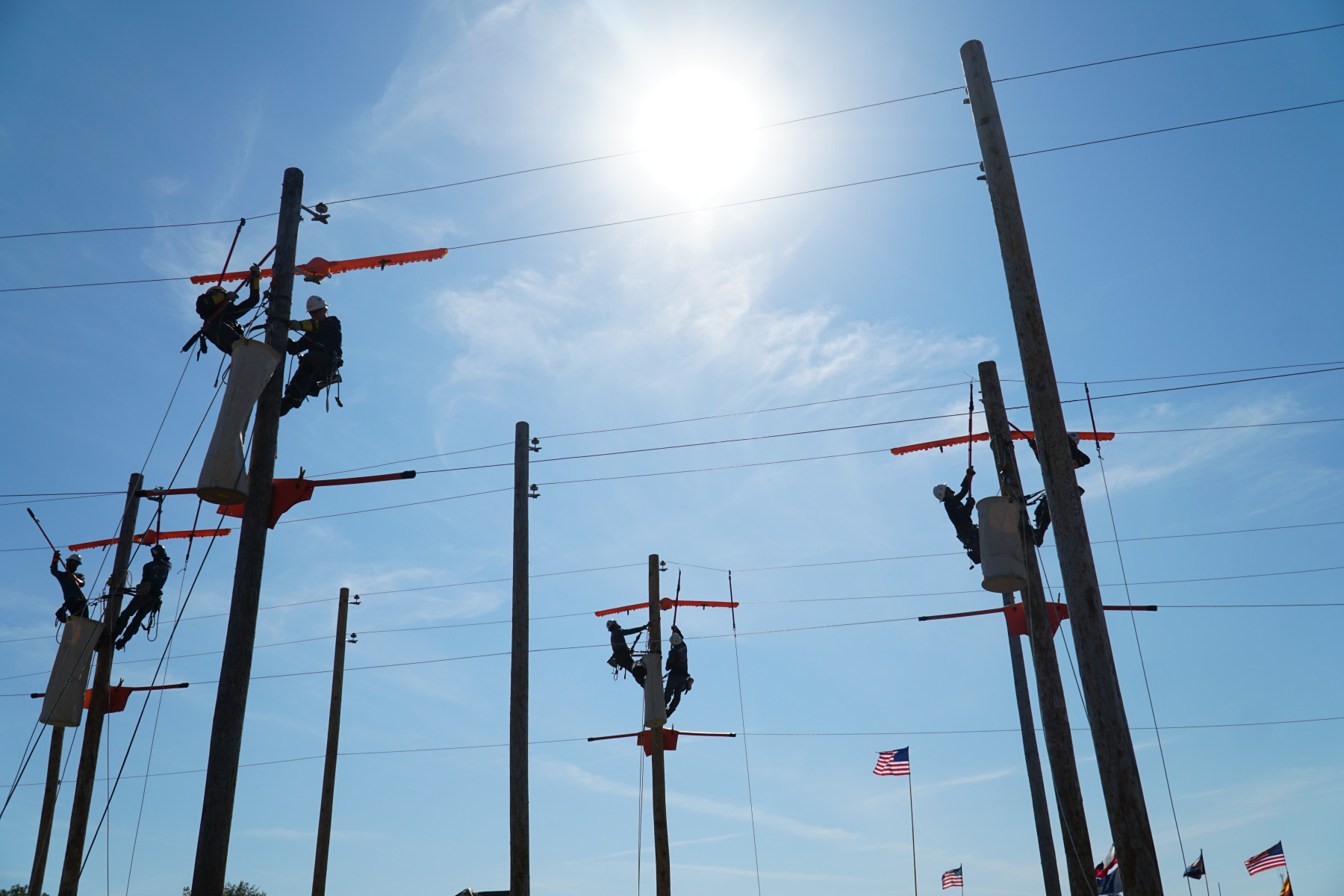
Hundreds of lineworkers gathered around journeyman Paul White in a field outside of Kansas City, Mo., on a crisp, clear morning in late October, eagerly awaiting the beginning of the 40th annual International Lineman’s Rodeo. With the moon still high in the sky, spotlights and head lamps illuminated the rows of tents and dozens of 40-foot power poles flanking White as he addressed the crowd.
“Everyone here this morning is connected to the electric power industry. And, the demand for electric energy never rests,” said White, a longtime journeyman lineworker and rodeo competitor who delivered introductory remarks and helped emcee this year’s event. “The lineman trade has a proud history that demands a specialized skill set.”
That skill set was on display over the course of the four-day event, which drew competitors from across the continental United States, Puerto Rico, Canada, Brazil, and beyond. Rodeo organizers estimated more than 5,000 spectators and nearly 1,100 lineworkers traveled to Kansas City for the competition.
The event is a friendly competition among some of the most skilled lineworkers in the world, and it celebrates the brave men and women who regularly work in dangerous conditions to maintain and repair the critical energy infrastructure that powers our nation.
“Whether linemen are working under sunlight, moonlight, or spotlight, they get the job done, and electricity continues to flow,” said White. “The satisfaction of the job goes well beyond a paycheck.”
‘It’s Not About How Fast You Get Up and Down’
EEI was a sponsor of this year’s event, which was hosted by Evergy, an EEI member company. EEI and its members historically have maintained a strong presence at the rodeo, with nearly half of the three-person teams competing at the 2024 rodeo hailing from investor-owned electric companies. Other competitors were contractors or represented public power utilities and electric cooperatives.
“I love it. I’ve been blessed over the years to have some great teammates, and I have friends I’ve met from all over the country out here,” said Jason Novak, an Ameren Illinois lineman and 23-time rodeo competitor whose team ended up placing first overall at this year’s competition.
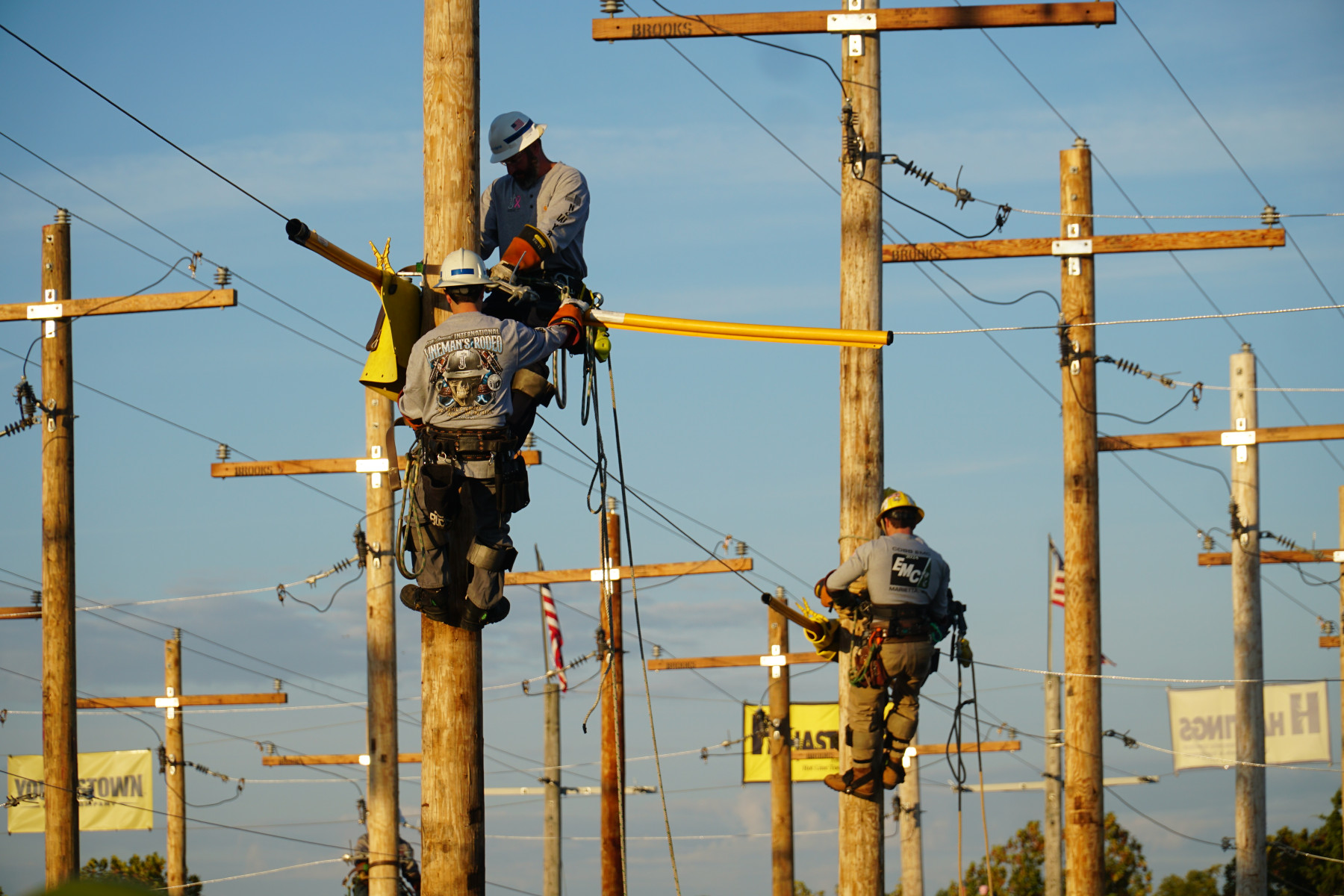
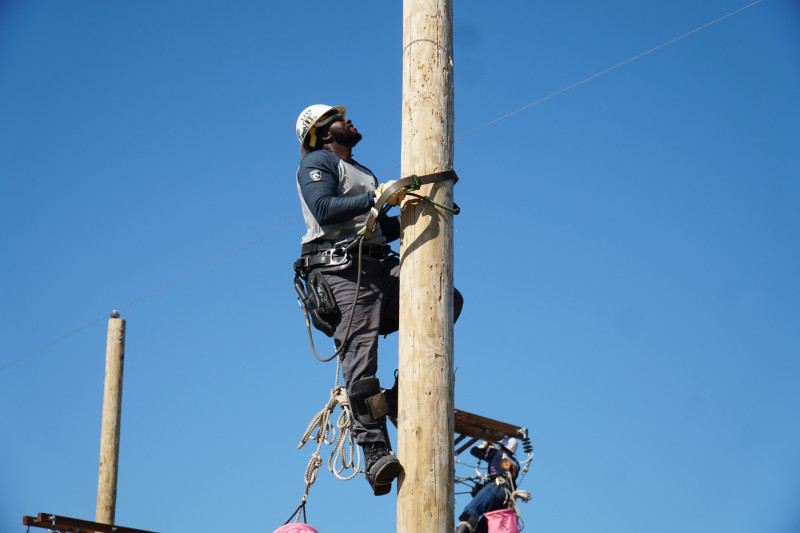
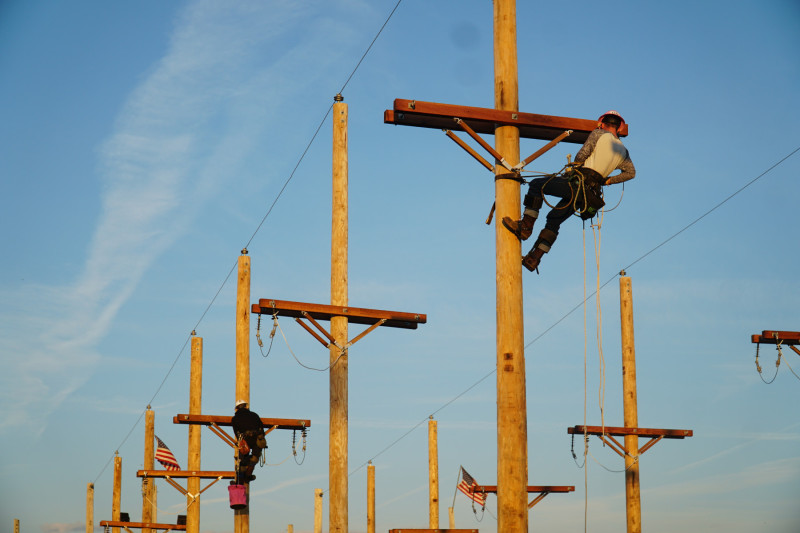
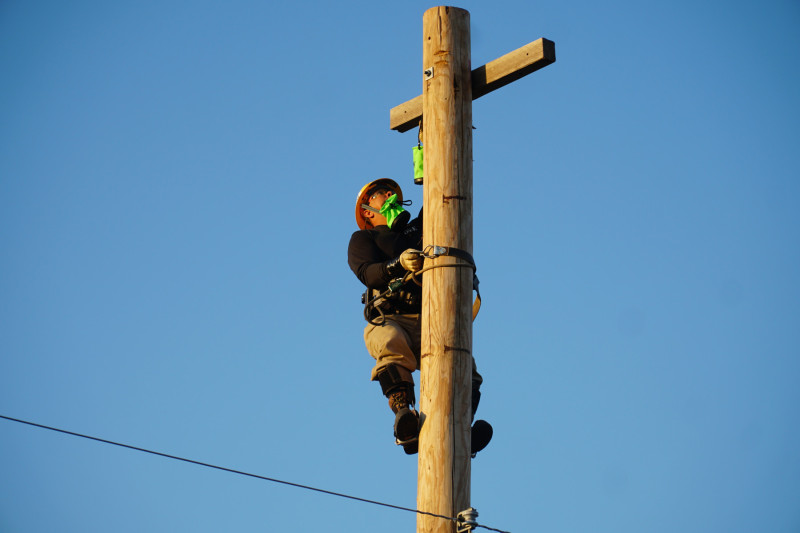
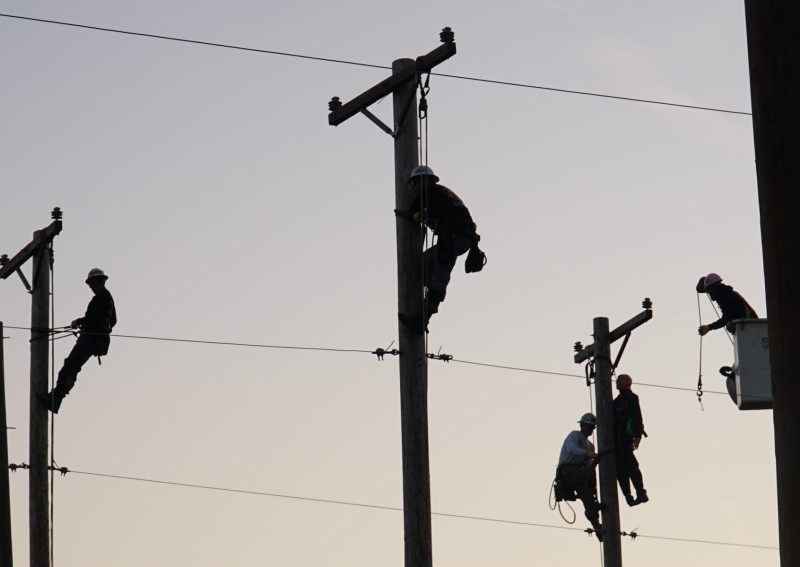
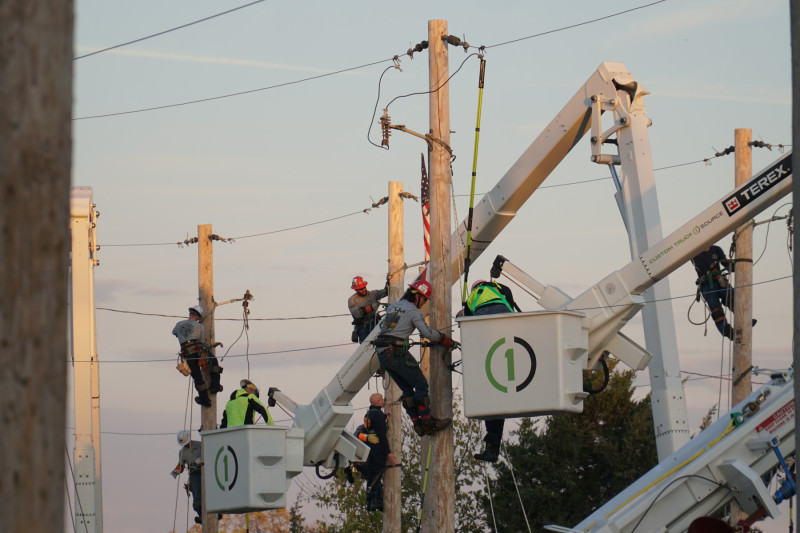
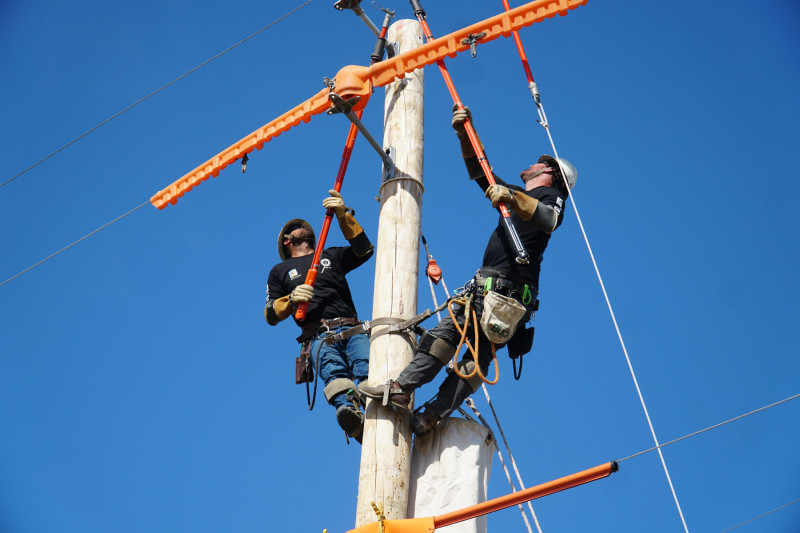
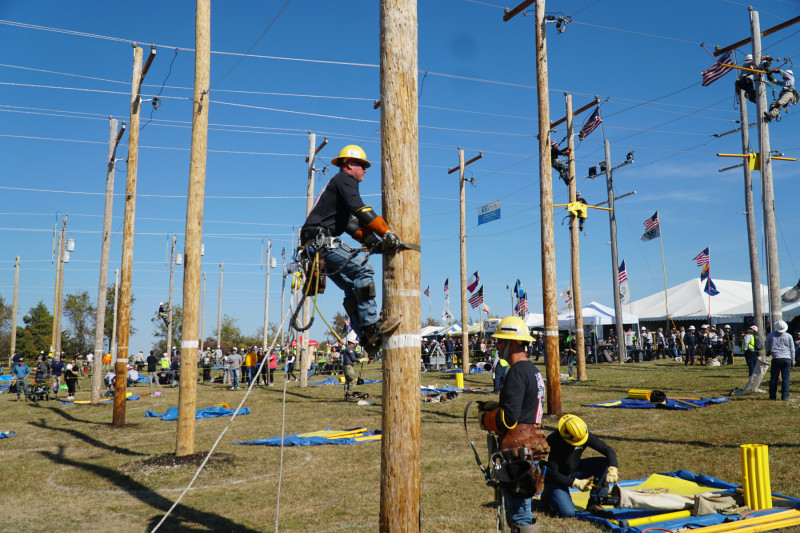
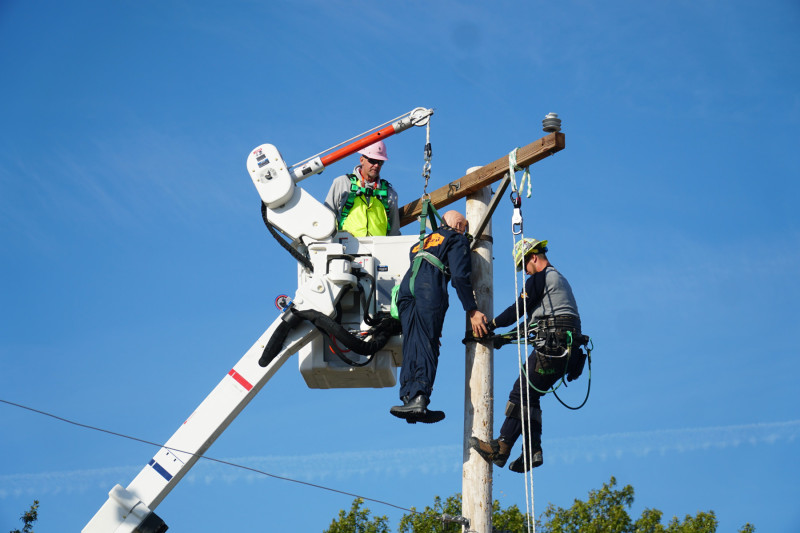
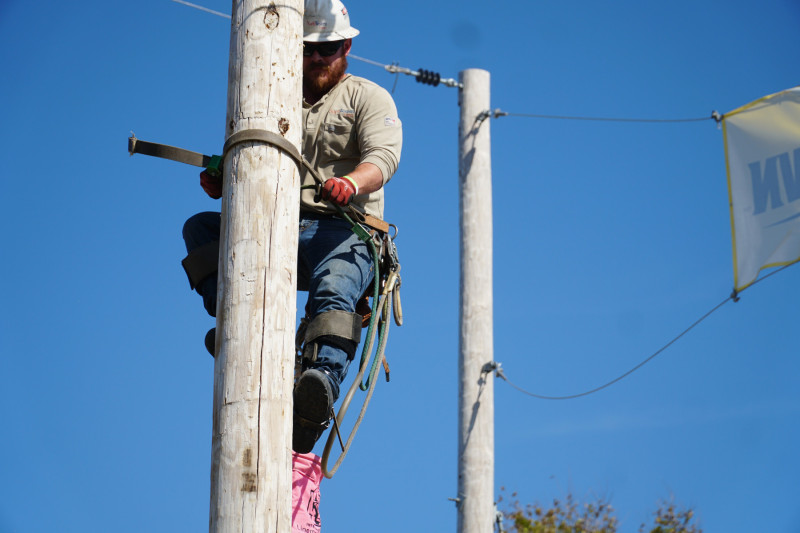
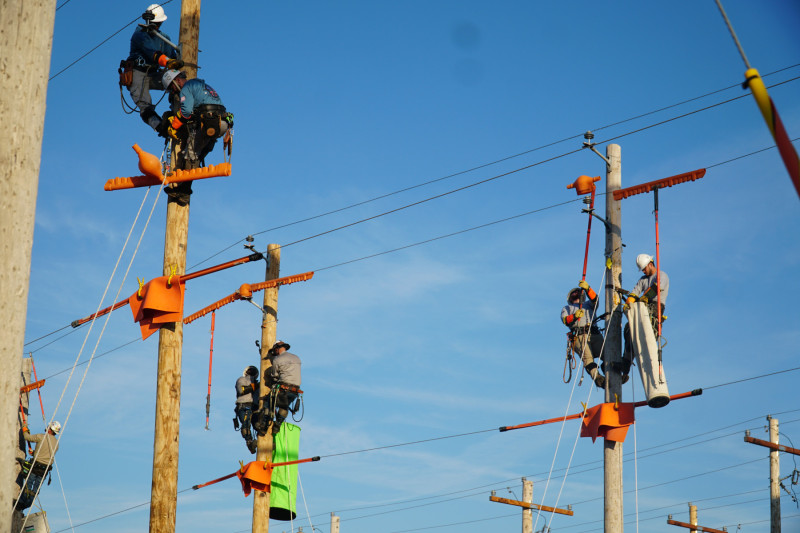
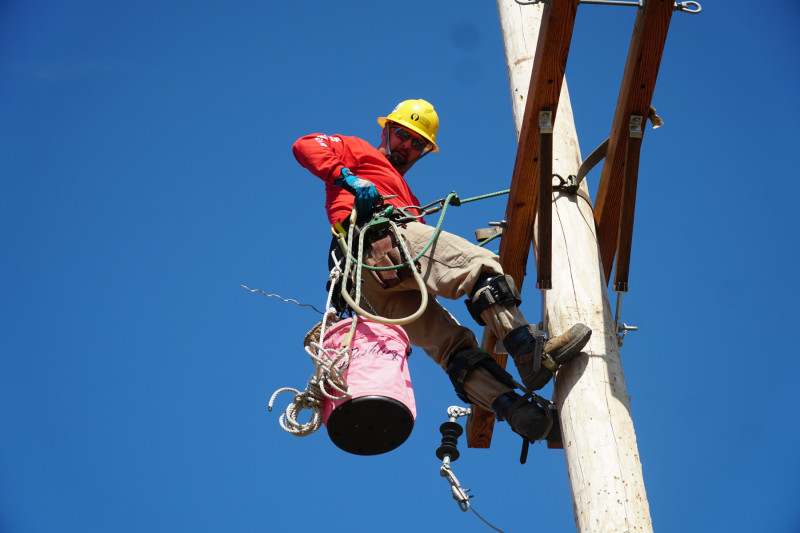
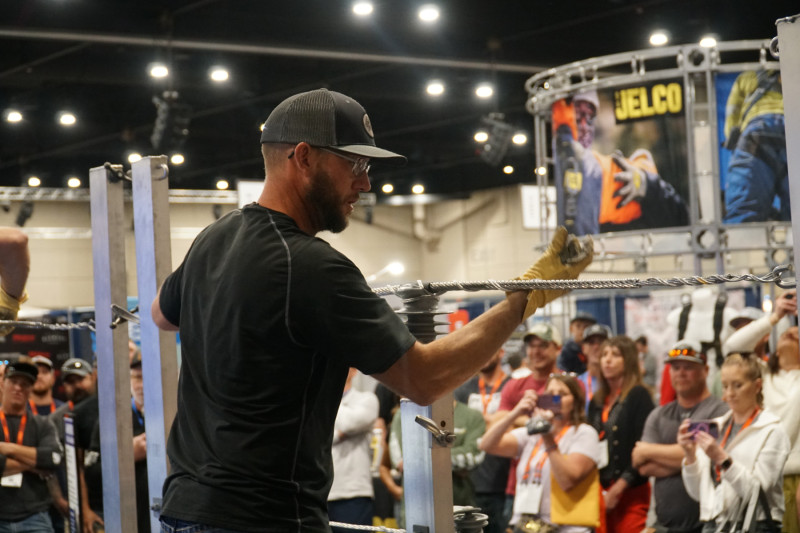
Despite having “rodeo” in its name, the International Lineman’s Rodeo does not feature lassos, bulls, or barrel racing. In place of horses and 10-gallon hats are harnesses and 50-foot bucket trucks, as lineworkers compete in a series of skills challenges. In one event, they rescue dummies dangling from power lines. In another, they race up power poles while attempting not to crack an egg held in their mouth.
Lineworkers are divided into three-person teams and compete across four events, each of which tests skills they pick up on the job. Two events in the competition aren’t revealed until the weekend of the rodeo, making it more difficult to practice in advance. A separate scoring track for apprentice lineworkers also allows those who are just beginning their careers to test their mettle among their peers.
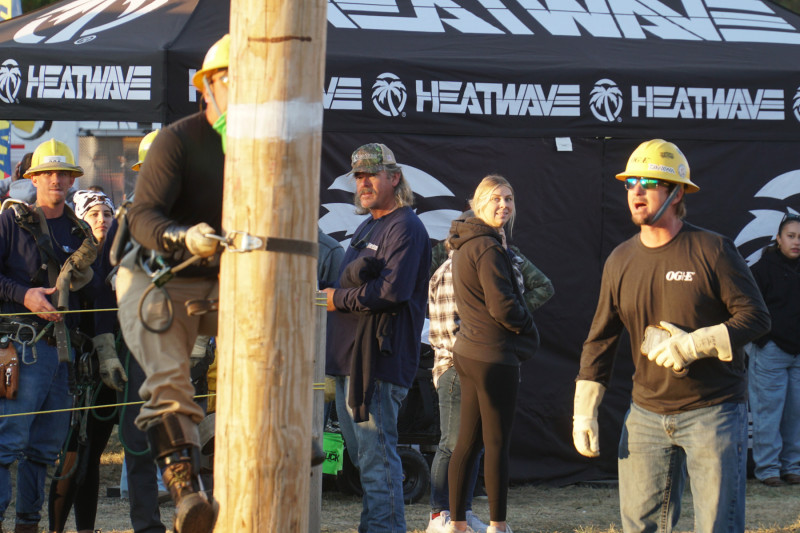
Participants are scored on how quickly they complete the challenges but also on how well they adhere to safety protocols and best practices.
“Everything we do here is about safety. It’s not about how fast you get up and down that pole,” said Dale Warman, co-chairman of the International Lineman’s Rodeo Board of Directors and a retired director of field operations at Kansas City Power & Light, which is now Evergy. “You have to be safe, and, if you’re not, you’ll have points deducted. It’s a big part of your scoring.”
It’s an event that participants train for all year—on the job and through separate, smaller competitions, since most companies only have a certain number of rodeo slots available.
“We have our own rodeo every year in August, and all of the Oklahoma Gas & Electric (OG&E) guys will compete against each other. We take the best of the best from our rodeo up here to compete,” said Tyler Scott, a supervisor at OG&E who was attending his fourth international rodeo.
Reflecting on Mutual Assistance
Warman recalls the inaugural lineworker rodeo that he helped set up 40 years ago. Twelve teams initially were slated to compete, but a dispute between teams before the rodeo began meant that only eight actually participated. That’s compared to the nearly 230 three-person teams and nearly 400 apprentices who traveled to this year’s event—numbers that would have been higher had Hurricanes Helene and Milton not struck the southeastern United States only a few weeks prior, prompting one of the largest mutual assistance efforts in the electric power industry’s history.
“That’s why some of the guys aren’t here today. They’ve been down there answering the call,” said Scott. “It’s something that all of us take pride in. I was just in Georgia for 17 days.”
Scott and his colleagues at OG&E joined an army of more than 50,000 workers from nearly every state in the country to assist with storm recovery and restoration efforts following Helene. When Milton struck the Gulf Coast of Florida two weeks later, crews were diverted to Florida. That led to dozens of would-be rodeo competitors dropping out at the last minute because their work in Florida, Georgia, and the Carolinas was not yet finished.
“Another supervisor who was supposed to be here is down in Florida helping with the hurricanes, so I stepped in to help run things this year,” said Jesse Trumble, a senior operations supervisor at National Grid, who helped to coordinate and organize National Grid’s competitors from Massachusetts and New York. “That’s part of the job, and it’s a great service to the people impacted.”
Those unable to attend the rodeo because of the mutual assistance response were acknowledged throughout the weekend. Reflecting on their colleagues’ absence, many attendees recalled previous mutual assistance deployments to Louisiana, Puerto Rico, Texas, and up and down the East Coast in response to hurricanes and strong storms. Although many acknowledged such assignments can pull lineworkers away from friends and family for days or weeks on end, there was a shared sense of pride in helping restore power to those in need.
“We get calls all the time and at all hours of the night. We can be gone from our families a lot. But, it’s part of the trade, and I’d want the power to be on in my home for my family. So, I’m happy to make sure that happens for someone else,” said Novak of Ameren Illinois.
‘Line Families Help Other Families’
Novak’s Ameren Illinois team scored a perfect 400 points throughout the course of the rodeo, completing skills challenges with the fastest time to win first overall. A second Ameren Illinois team, two teams from Pacific Gas & Electric, and a team from Southern California Edison also placed in the top 10 overall, and 20 of the top 50 journeyman lineworker teams hailed from investor-owned electric companies.
“This event is the best of the best. We get some practice time, but a lot of training for this we do on our own,” said Novak. “This is high competition. You need to be fast, and you need to be clean.”
For Novak, though, winning first overall was only one of the weekend’s highlights. While many competitors were practicing and preparing for the challenges ahead, Novak spent the day before the rodeo raising money for Climbin4kids, a fundraising organization that he helped found in 2021 to support St. Jude Children’s Research Hospital.
Thanks to generous support from Ameren Illinois, the International Lineman’s Rodeo Association, Novak’s fellow rodeo competitors, spectators, and vendors at the event, Climbin4kids raised nearly $84,000 during the rodeo.
“Line families help other families,” Novak said. “That’s what we do.”
Although the rodeo is planned by and for lineworkers, Warman said it has always been structured with service and community in mind, since both are so intrinsically tied to the lineworker profession.
Warman is also proud that the atmosphere of these events is “always all about family.” Play areas and activities are set up for kids throughout the weekend, as many lineworkers bring their families to watch them compete. In some cases, it’s their loved ones’ only real opportunity to see the intricate and, at times, dangerous work that they perform every day.
“I appreciate the family atmosphere of the company and this rodeo and the camaraderie of the linemen,” said Jason Grier, an operations manager at CenterPoint Energy. Grier is a 17-time rodeo competitor who now heads CenterPoint Energy’s rodeo committee.
“It’s a real brotherhood, and I love that aspect of it,” he said.
Rodeo organizers also noted that the event is a great opportunity to showcase a rewarding and in-demand career path to children and young adults in attendance. Although some rodeo competitors had family connections that sparked their interest in the industry, many said they stumbled into the job through a recommendation from a friend or after seeing a job posting.
Scott of OG&E recalled a line foreman living a few houses down from his family growing up. He said he was inspired to become a lineworker after seeing his neighbor and others hard at work during an ice storm while he was in high school. He hopes to offer that same inspiration to others.
“I watched those guys work outside all day to get the lights back on in our house. It’s just something I always knew that I wanted to do,” he said. “I have a son and two daughters, and I would suggest anyone get into this line of work. I take a lot of pride in doing this work in my own community when my own friends and family don’t have power. People will always need electricity. It’s very fulfilling.”