
A Career of Resilience: Nina Plaushin on Regulatory Policy and the U.S. Transmission Landscape
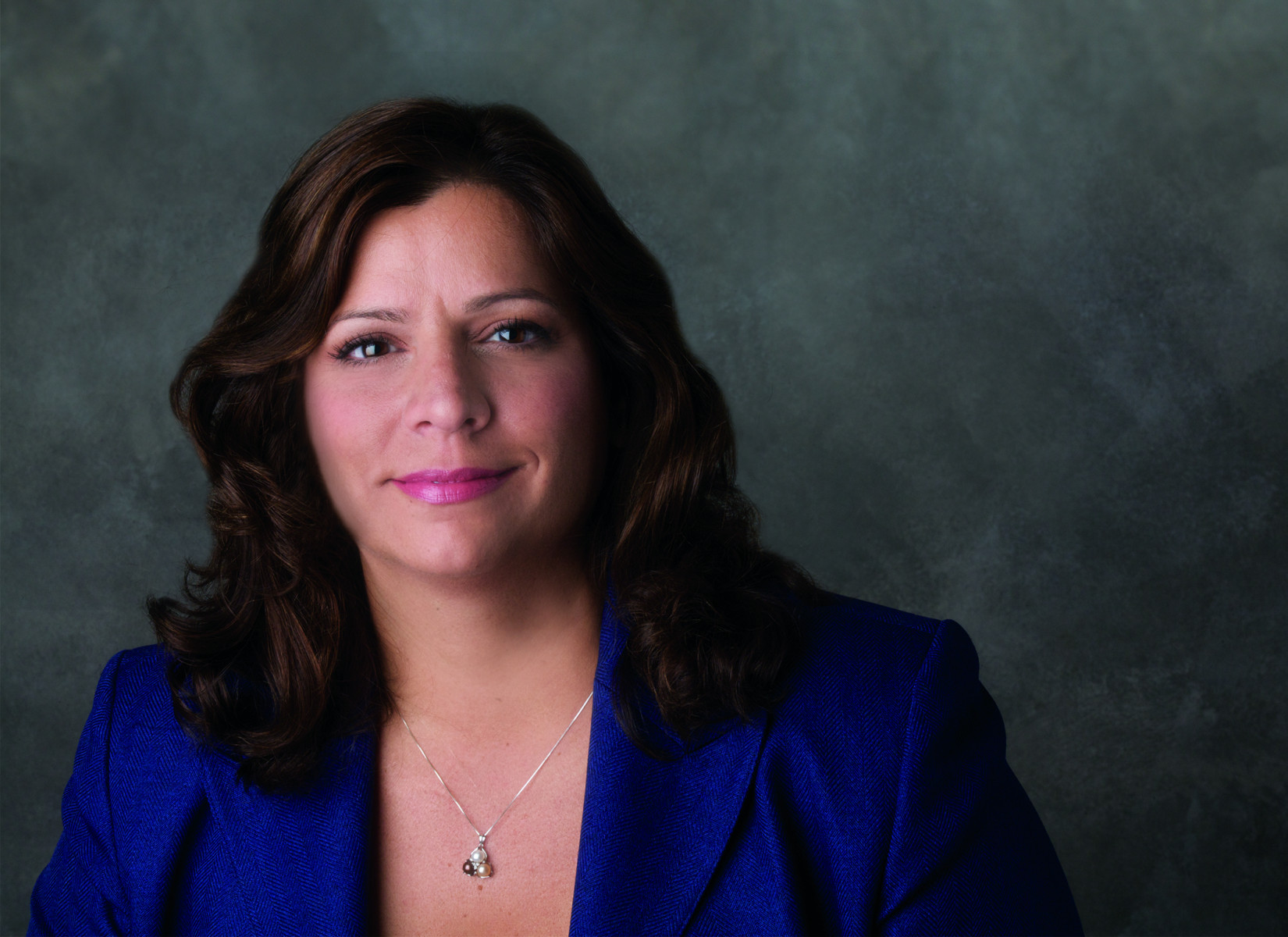
Nina Plaushin, who retired in April as vice president of federal a airs and regulatory strategy at ITC Holdings Corp. (ITC), recently spoke with Electric Perspectives to share her thoughts on transmission planning and the lessons she has learned during her more than 25 years in energy policy.
Electric Perspectives (EP): What are some of your proudest accomplishments from your more than 25 years managing federal- and state-level government regulatory policy?
Nina Plaushin (NP): One of the most significant accomplishments of my career was helping to create a new business model. The concept of a standalone transmission company like ITC, which prioritizes investments in grid reliability, did not exist a few decades ago. ITC was launched in 2003, just a few years after regional transmission organizations (RTOs) started to be formed. Sustaining ITC for 20 years is a real credit to the whole company and our team.
I cannot emphasize enough how often we have intervened in legislation or regulation, because things were written as though they only applied to integrated electric companies and didn’t address our business model. We’ve led a lot of education over many years.
EP: What are the biggest policy shifts you have seen during your career?
NP: What is fascinating about my career and this industry is that things have been dynamic, changing relatively quickly for what had been a fairly static industry for more than 100 years. I’ve been around long enough to see merchant generation come and go, and I have seen a big shift in the way people think about the grid. I was there for the epic battles in the 1990s when we formed the wholesale energy markets. In many parts of the country, we now have RTOs. More recently, we’ve been focusing on demand response and distributed generation. We’re looking at variable resources and how you can manage them on the grid from an operational perspective.
All of this really demonstrates that how we use the grid, and what our expectations are for the grid, have changed over a relatively short period of time, impacting everything from what kind of generation we’re considering to infrastructure location and how we manage assets.
On a more personal note, one of the big shifts I observed is the increase of women in leadership roles throughout the industry. I could go back 25 years to when I started, and there wasn’t a single woman CEO at the table. That’s certainly not the case anymore. I’m glad that I was a part of that, and I’ve worked to mentor women and promote women throughout my career. There has been a positive change in diversity, equity, and inclusion in the industry, generally.
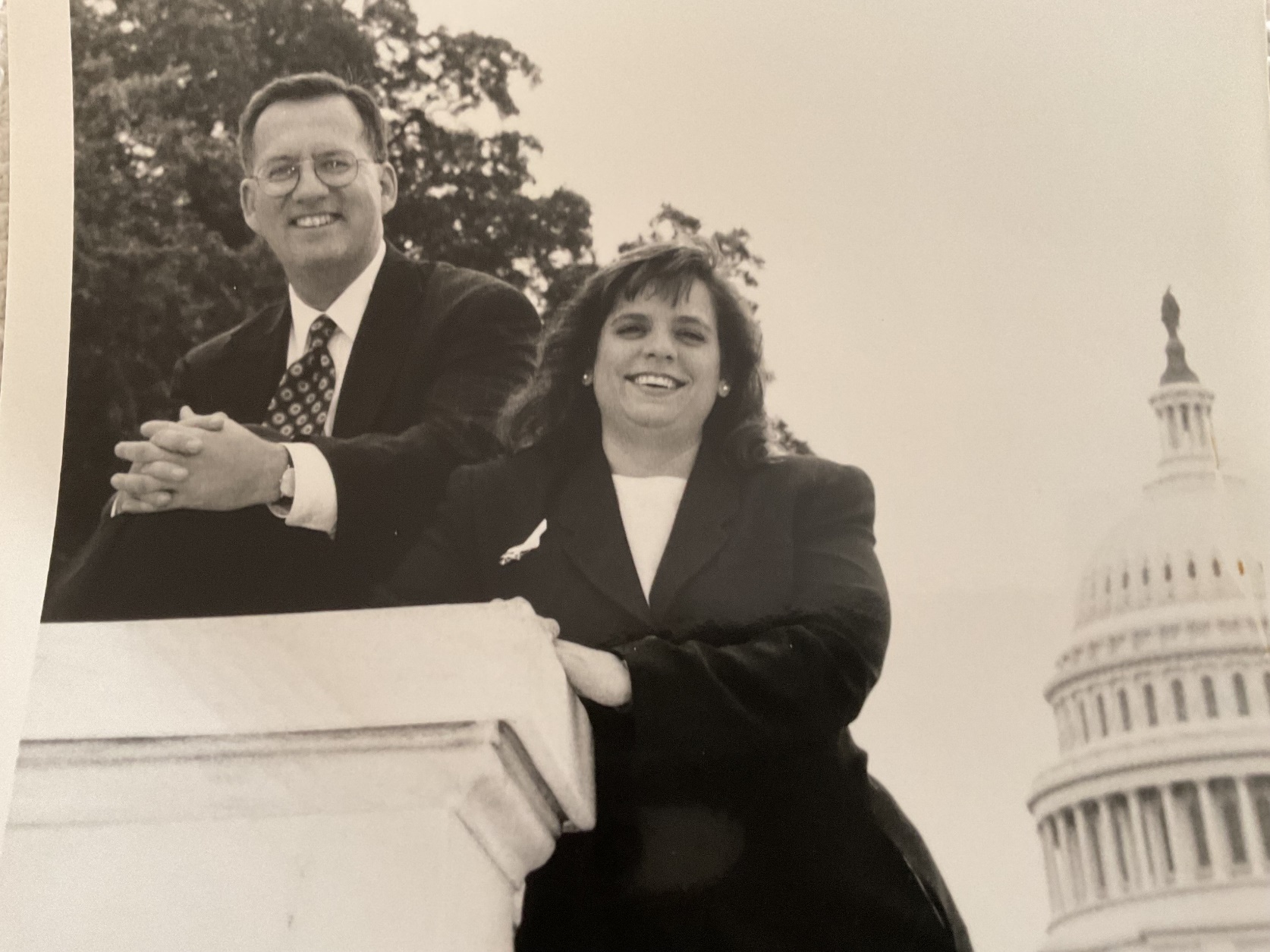
In the late 1990s, Plaushin worked under John Sparkman, who was head of Pennsylvania Power & Light’s office in Washington, D.C. The company would become the PPL Corporation in 2000.
EP: What is your perspective on grid planning in the United States, and where do you see opportunity for reform?
NP: There are a lot of things to consider. When it takes 10 years to build a 345-kilovolt line, you can expect that in that time, things might shift a little under your feet. There are supply chain challenges. There are siting and permitting challenges. RTOs have short-and long-term planning horizons, some looking as far as 20 years out. You can’t just build transmission on a whim.
Load growth is another factor. The Federal Energy Regulatory Commission (FERC) revised its projections for demand growth over the next five years from 2.6 percent to 4.7 percent. T hat may not sound like a lot, but the industry has grown by an average of 0.5 percent gigawatts in each of the last three years. So, you can see the disconnect there.
Some people have a misconception that renewable resources are the only drivers for transmission investments. While they are a factor, there are a lot of things driving it. Since 2021, FERC has tracked $481 billion in commitments for industrial and manufacturing facilities. Data center growth is expected to bring $150 billion in investments between now and 2028. We see that as a big driver of transmission investment.
I do think FERC Order 2222, which deals with aggregation of distributed generation, will have a profound impact. Look at a diagram of a transmission system: “Here’s a generation plant. Here’s the transmission line. Here’s a distribution line. Here’s your load.” This is an oversimplification, but now distribution-level entities are beginning to feed energy back into the grid and selling on the wholesale market. New investment will be stimulated, because you can’t just drop a bunch of aggregated distributed generation into the system. You’ve got to be able to move it around. You’ve got to be able to physically aggregate it.
From a planning perspective, we used to be focused on building large-scale generation close to load. Now, we’re looking at resources that can be remote and are variable, and that creates a lot of new ways to think about—and a lot of challenges for—planning and operations.
When you have a lot of variable resources, you must balance them to ensure reliability. You can use natural gas peaking plants. You can use geographic balancing. And, you can have large-scale batteries push power onto the grid very quickly if a variable resource goes down. That’s something we don’t really have yet at the transmission level. There has been more focus on battery storage at the distribution level to firm up power being fed into the grid.
On the transmission side, if we could ever figure out an affordable battery option, that would fundamentally change the way the industry thinks about planning criteria. In five to seven years, this is going to be a big topic of conversation, because we will have so much more variable generation on the grid.
Partisan disagreements impact issues of importance to the industry. That has resulted in a lot of disagreements that are important to the industry. Do you want to plan for climate change? Do you price carbon? It’s very difficult when you lack consensus across party lines in Congress, especially when that same partisanship seeps into the regulatory agencies. With an election coming up, is everything going to change?
From an investment and planning perspective—whether it’s planning the grid or planning your generation or planning anything—you need to know what the rules of the road are going to be. And right now, it’s not always entirely clear.
“From a planning perspective, we used to be focused on building large-scale generation close to load. Now, we're looking at resources that can be remote and variable...”
EP: Reputable studies consistently suggest transmission capacity in the United States must increase significantly in the coming decades. What must be done to close that transmission gap effectively and efficiently?
NP: There seems to be consensus around the need to build more capacity and have more transmission and more investment. That may not sound like a huge thing, but it’s been a real labor of love over many years to make people recognize the benefits of transmission and understand the current and future needs.
Collaboration is key. We need to talk about interregional transmission—and not only because of variable resources and the potential for geographic balancing, which would allow for greater deployment of renewables. From a resilience perspective, the ability to move power between regions is critical.
The competitive processes created by FERC Order 1000 remain a distraction and have slowed the process. I think we’re now seeing more states enact legislation aimed at accelerating development of transmission projects, because getting through the current process is challenging. We have enough variables and challenges. We don’t need to have a whole additional process where a developer can place a super-low and unrealistic bid, be selected for a project, and end up collecting costs significantly over that bid.
And, doing this outside of regulatory oversight doesn’t protect customers. We are not seeing the major savings that we were supposed to see from Order 1000. What we’re seeing are very lengthy processes that are expensive, complex, and not good for customers.
EP: What role does resilience play in the United States transmission landscape, particularly in the context of extreme weather events that have become more frequent across the country?
NP: When a lot of people talk about grid resilience, they are talking about physical damage from storms and extreme weather events, including extremely hot and cold temperatures that stress the system.
This type of resilience is not a new issue, but the scope and scale are new. We have to be committed to resilience on a bigger scale. We can replace old equipment. We can upgrade line voltage or put in new conductor technologies. Vegetation management is also essential.
The industry has done a magnificent—and, at times, an underrecognized—job of improving storm restoration and enhancing the mutual assistance program. Convoys of trucks come from all over the country to wherever they’re needed. But, with these larger-scale events, when you have a storm that covers half of the United States and that impacts several states at once, it becomes more difficult to coordinate.
I think we need a regional approach to managing resilience. Iowa has a problem with flooding and ice. Florida has a problem with hurricanes. Kansas has a problem with tornadoes. Arizona has a heat problem. We have a rough idea of the environmental threats that are in each region, and that factors into how we think about resilience and how we plan for it.
The reality is the North American Electric Reliability Corporation (NERC) has reliability and cybersecurity standards, but not explicit resilience requirements. There are no FERC requirements. There’s liability associated with having an outage through NERC, and electric companies take all of this very seriously. But, we need regulator buy-in at the federal and state levels to help guide investment decisions.
It costs money to harden systems. Over time, the idea is that hardening saves money, because you don’t have to rebuild major facilities every time a storm rolls in. When you think about the economic ramifications of outages, you have to think about the loss of manufacturing activity, the impact on hospitals, the impact on communities and homes. Those aren’t always easily quantifiable costs, but outages are disruptive and can be very dangerous. If you know you’re going to have major storms every summer, it seems kind of silly and imprudent not to invest in hardening.
Supply chains are a big part of this discussion. If you can’t get things because they’re not manufactured in the United States, or if there are long wait times, that’s a problem. EEI has advanced the Spare Transformer Equipment Program, and maybe that’s a model that we need to think about. As EEI’s member companies know, waiting until you’ve had a big storm to worry about supply chain is the wrong way to do it.
EP: Thomas Edison once said, “Our greatest weakness lies in giving up. The most certain way to succeed always is to try one more time.” How has the concept of perseverance factored into your work at ITC?
NP: Managing uncertainty in the industry is a type of perseverance in and of itself. The best example may be trying to get a large line built, especially one that crosses federal land. That’s a long-term endeavor that requires tenacity.
ITC tries to get local buy-in and support before we build lines. Even then, sometimes we get delayed by litigation. Especially with our big projects, like the Cardinal-Hickory Creek Transmission Line Project in the Midwest, which initially was approved 13 years ago, those take a long time. A big part of that is litigation, often by individual landowners and conservation groups.
During my career, there have been countless FERC chairs. I have worked with lawmakers in a lot of different sessions of Congress controlled by different parties. One of the things that makes the job interesting is that some of the issues don’t change all that much, fundamentally, but the players change.
The political climate changes. From a policy point of view, if something isn’t happening and you’re doing everything you can to educate and influence people, come November, you may find that the whole chess board was thrown up in the air and you’ll be starting all over again.
That is fun, but it also requires perseverance. You need to believe that what you’re doing today is going to have a benefit in the future. If you don’t like delayed gratification, don’t go into regulatory policy.
When you do get that gratification, it really is amazing. I did a lot of work before FERC Order 1000 came into existence, promoting some of the same things we have in place now. When that was finally issued, it was such a high. Although it is not what we initially envisioned, I was so proud of the process. Then, we got right back to it, because you need to do compliance for the next several years, and then there’s the next rulemaking. You have to take your victories where you can.
I have my own little saying: “I can wait to be proven right.” That’s not a great way to run an industry, but it is helpful from a legislative and regulatory perspective.
“You need to believe that what you're doing today is going to have a benefit in the future. If you don't like delayed gratification, don't go into regulatory policy.”
EP: Edison also once said, “To have a great idea, have a lot of them.” What, or who, have been some of your greatest sources of ideas or inspiration or creativity throughout your career?
NP: I get inspiration from the people around me. At the first job where I ever did regulatory work, at a company that was then called Pennsylvania Power & Light and is now PPL Corporation, I had a boss named John Sparkman. He really taught me a lot about being a number two in a Washington, D.C., office and about how to do regulatory work. It was a fantastic experience.
More recently, I learned so much from Linda Apsey, president and CEO of ITC. The opportunities that I had at this company were life-changing.
Part of my education was being a staffer on Capitol Hill, working for U.S. Representative Tom McMillen (D-Md.) who served on the U.S. House Energy and Commerce Committee when it was chaired by the late U.S. Representative John Dingell (D-Mich.). That was a political masterclass. The people in this industry who I have been blessed to work with—people like former U.S. Deputy Energy Secretary Linda Stuntz—are legends to me and have not only been mentors, but have had a profound impact on how I think about transmission, worklife balance, being a woman in this industry, and a lot of other things.
We have so many smart people throughout this industry, and there is nothing more satisfying than working with a group of smart people to solve problems. We don’t always agree on solutions. But, it is intellectually challenging work, and we all want good outcomes for our customers