

Leading a Proactive, Nimble, Impactful Association: Q&A With EEI President and CEO Drew Maloney
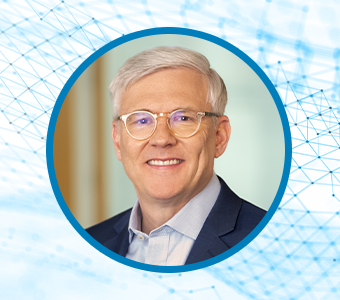
This summer, EEI welcomed Drew Maloney as its new president and CEO. Maloney has spent the past 30 years at the cross-section of politics and policy.
He previously served as president and CEO of the American Investment Council (AIC), where he built a reputation for effective industry advocacy and strategic leadership. Prior to that, he was unanimously confirmed by the U.S. Senate to serve as Assistant Secretary of the Treasury for Legislative Affairs.
Maloney appeared on the Electric Perspectives podcast to discuss his priorities for EEI; the electric power industry’s commitment to providing reliable, affordable energy for customers nationwide; and how the industry is strengthening America’s energy dominance.
Electric Perspectives (EP): During your first few months in your role, what are your first impressions of the work underway at EEI and with its member companies?
Drew Maloney (DM): This is a tremendous time to be involved in the electric power industry. I have been impressed with the amount of work underway, and the commitment to energy policy, here at EEI.
Member engagement is one of the unique values that EEI has, and members are really engaged in policy discussion.
An example of the commitment our members have to the customers they serve is the annual EEI Emergency Response Awards. What some of these members have done for disaster relief in their communities is just amazing. In a matter of days, they've rebuilt millions and billions of dollars of infrastructure that was impacted by storms, wildfires, or extreme weather. This kind of response—and this type of commitment to communities—really stands out for our members.
EP: What led you to EEI, and how will you leverage your background and expertise as EEI and its members engage in policy discussions?
DM: When I started my young career as a staffer on Capitol Hill, energy was one of the first areas with which I was involved. I was working for a lawmaker from Mississippi, and I distinctly remember Southern Company and Entergy coming into our offices to educate me on energy policy.
Ever since, I've had a fondness for energy. I later ended up working for an oil and gas company and am now leading EEI. This is the culmination of my policy background—understanding how Washington works and how to navigate that to achieve outcomes that help our members serve their customers in a reliable, affordable way.
EP: What insights can you share about cutting through the noise in Washington and working with our partners on Capitol Hill?
DM: Washington has become a very noisy place. It requires you to stay focused on what your message is and to repeat your message, because so many other people are out there with their own messages.
A lot of people make the mistake of being too complicated in their messaging. You really need to focus on your one pager.
The other thing to remember is that you have to build champions to achieve the legislative outcomes that you want in Washington, and those champions aren't always built in Washington. EEI’s secret sauce is that we build those champions in every community across America. That's how you are ultimately successful in advancing policy goals.
EP: Things also change quickly in Washington. How are you making sure EEI is ready to engage and to create opportunities for changing the conversation?
DM: I've given a lot of thought to what makes a trade association successful. In today's very complex and noisy environment, you have to be very proactive, very nimble, and very impactful. That's the culture that I want to build out at EEI.
We have to be ahead of the curve. In the current construct, you could have state policies, federal policies, or engagement on Capitol Hill switching on a dime. As an organization, you have to be able to act quickly.
You also need to create a “surround sound” supporting your advocacy. It used to be that you just had a team of lobbyists that would advocate on your behalf. Today, you not only need that team of lobbyists—you need support from third-party advocates. You need partners out there who are supporting you.
You have other trade associations working with you. You have a social media plan. You have research. You have all these other items out there that complement what you’re doing. You have to make sure they’re all working in concert to deliver the message and deliver the value and the advocacy that you need.
You have to be a results-oriented organization. That’s exactly what I intend EEI to be. I can already see, as we’re responding to different needs with the Administration, how we’re being proactive and how we’re being nimble. That’s how you get the impact that you want here in Washington.
EP: Earlier this summer, you attended the Pennsylvania Energy and Innovation Summit, which was hosted by Sen. Dave McCormick (R-PA). What did you think of the event? How were attendees thinking about the role that electric companies play in these conversations?
DM: We are at a unique moment in time, with unprecedented growth in the energy sector. You have the reshoring of manufacturing that's requiring more energy. You have AI and innovation requiring more energy. You're seeing electrification—whether that involves cars or homes—raising demand for energy.
We have a critical role to play, and we are playing that critical role to meet demand. What that event allowed us to do is highlight the investments we're making and show the partnerships we're forging in the private sector to deliver power in a reliable and responsible way.
EP: Earlier this summer, you attended the Pennsylvania Energy and Innovation Summit, which was hosted by Sen. Dave McCormick (R-PA). What did you think of the event? How were attendees thinking about the role that electric companies play in these conversations?
DM: We are at a unique moment in time, with unprecedented growth in the energy sector. You have the reshoring of manufacturing that's requiring more energy. You have AI and innovation requiring more energy. You're seeing electrification—whether that involves cars or homes—raising demand for energy.
We have a critical role to play, and we are playing that critical role to meet demand. What that event allowed us to do is highlight the investments we're making and show the partnerships we're forging in the private sector to deliver power in a reliable and responsible way.
EP: Was it encouraging to see participation from President Donald Trump?
DM: Yes, and there was an incredible turnout. We also had Gov. Josh Shapiro, the Democratic governor of Pennsylvania. Sen. John Fetterman (D-Pa.) was there. It really showed a bipartisan breadth of support for innovation and for energy. We also had several of our Pennsylvania members in attendance talking about the investments and commitments they're making to drive innovation and economic activity.
EP: EEI recently published its annual Financial Review, which detailed the industry’s financial performance during the past year. What are your key takeaways from the report?
DM: What stood out to me is the scale of investment planned in the years ahead. We’re projected to invest more than $1.1 trillion into energy infrastructure across America during the next five years. And, I actually think that number could be conservative.
That demonstrates that we are a partner for local communities. We're a partner for the government. We are working with a spectrum of stakeholders to meet energy demand in our communities while prioritizing affordability for customers, for small businesses, for farmers, all while meeting our nation’s growth and innovation needs.
EP: Earlier, you mentioned the importance of strategic communication and storytelling in Washington. How did you think about these priorities at AIC, and what do you think can be applied to your work at EEI?
DM: A great example of an opportunity for EEI would be the Emergency Response Awards, highlighting what our member companies have done in their communities to respond to natural disasters—or partnerships that we have with different groups that enhance or demonstrate our customer solutions.
Every industry is challenged with getting their story out, especially in Washington, where everyone is trying to tell their own story. You just can't tell your story often enough, and that’s what we’re going to focus on.
I want to improve our storytelling. I want to tell our stories more often. I want to be louder about it. I want to make sure that the stories we're telling are being told in the communities that our members serve. Then, we need to translate those stories in Washington, because these are great stories. We're great community partners, and we need to be better about highlighting our stories.
EP: For many years, EEI’s tagline has been Power by AssociationSM. What does that concept mean to you as you think about delivering value to EEI’s members?
DM: EEI’s CEO engagement is unique. Our member companies want to see their message and their policy successful here in Washington. What EEI's mantra—“Power by Association”—means is that we can accomplish a lot more by working together. When the most successful companies in Washington can come together with one single voice, they are so much more effective.
As a former government worker, having worked on Capitol Hill and in a previous Administration, I would go to trade associations when I wanted to get a view on energy or financial services. They represent the collective voice, and it's easier for a policymaker to go one-stop shopping as opposed to piecing together the views of different member companies.
When we as EEI come in, we bring member companies, and we bring one unified voice. That is a real value add that we have at EEI.
EP: Switching gears, you serve as Vice Chair of the Board of Trustees for the Meridian International Center. You and your wife established the Klein-Maloney Fellowship for Women in the Sciences at your alma mater, Randolph-Macon College. What more can you share about your philanthropic work and life outside of EEI?
DM: My wife and I met in college. She's a very accomplished scientist at Johns Hopkins University. She studies women's health, and she noticed a need for more women going into scientific fields. We decided to create a fellowship at our alma mater, encouraging women to perform research projects during the summer that we fund.
It's very exciting for her and for me, as well. We're the parents of two daughters, so we're committed to making sure that they have a path forward in life. We thought it was important to give back, because our college was instrumental in our lives.
The Meridian International Center’s global diplomacy work also is very important. While most of our activities at EEI are focused on domestic markets, what happens overseas and the trends that you see internationally are important and ultimately influence what happens in the United States.
I have always been interested in that sort of work, and it helps make me a better advocate who has a better grasp on what's happening in other regions of the world that may influence what we do here at home.
EP: During EEI 2025 in New Orleans, you mentioned that your first job was a sheep and poultry farm worker. Did you learn any lessons in that role that still guide you today?
DM: You have to get up early to finish your chores on a farm. I'm glad that, today, I don't have the same chores that I did when I was a young 4-H and FFA member. But, that sort of work does teach you responsibility early on.
I grew up in a rural part of Virginia, and I've lived in Washington, D.C., for most of my adult life. I appreciate having that perspective, understanding the challenges faced by people on a farm where I grew up. I have a better understanding of what and how to communicate with different audiences, because I feel like I've lived in different places.
I really do treasure growing up on a farm, raising sheep, going to the county fair. It was a lot of fun, and I wish my kids had that same opportunity.

EEI President and CEO Drew Maloney is calling for reform to siting and permitting processes that “can stop projects in their tracks or add years to deployment timelines.”