
‘If the Grid Doesn’t Work, America Doesn’t Work’: Resilience Key Focus at NARUC Policy Summit
Only two weeks on from Winter Storm Fern, mutual assistance and storm response were drivers of conversation throughout the NARUC Winter Policy Summit in Washington, D.C.
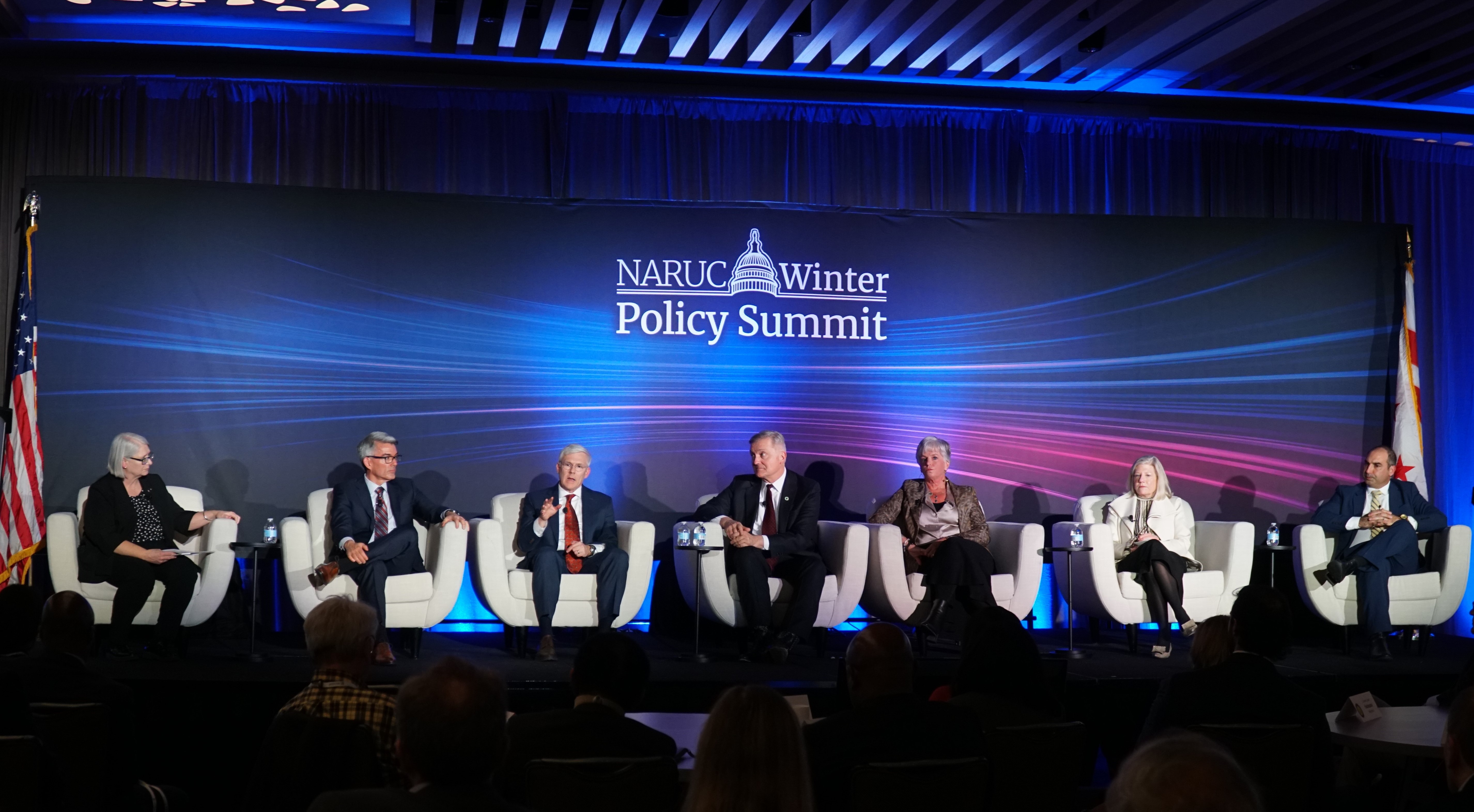
Left to right: NARUC President Ann Rendahl, NCTA President and CEO Cory Gardner, EEI President and CEO Drew Maloney, NRECA CEO Jim Matheson, American Water Executive Vice President and Chief Operating Officer Cheryl Norton, AGA President and CEO Karen Harbert, Florida Commissioner Mike La Rosa.
Industry-government coordination was front and center during the National Association of Regulatory Utility Commissioners (NARUC) Winter Policy Summit in Washington, D.C., in early February.
Only two weeks on from Winter Storm Fern, a historic winter weather event that impacted more than 200 million Americans and prompted the largest mutual assistance activation the United States had seen since Superstorm Sandy, mutual assistance and storm response were fresh on the minds of the of state commissioners, federal officials, electric company leaders, and other stakeholders who attended the annual gathering.
“The effort and the coordination among federal, state, local officials, our members, working across the industry, was amazing,” EEI President and CEO Drew Maloney said during a panel discussion, highlighting the significance of pre-positioning crews and resources “days before the storm hit.”
More than 65,000 workers from America’s electric companies braved frigid and hazardous conditions to restore power to impacted communities. The scale of this effort required regular and close communication with a range of stakeholders, Maloney said, highlighting industry coordination through the CEO-led Electricity Subsector Coordinating Council (ESCC) and regional mutual assistance groups, which was critical to ensuring a safe and efficient response.
“The grid is the most important engine in America. If the grid doesn’t work, America doesn’t work,” Maloney said, noting that companies are actively investing to make the grid more resilient to threats like winter storms. “Our members will be investing more than $1 trillion in the coming years to make it more reliable, more resilient, and more affordable.”
Industry response to Fern was a driver of conversation throughout the NARUC summit. During a separate keynote, Under Secretary of Energy Alex Fitzsimmons, director of the Office of Cybersecurity, Energy Security, and Emergency Response, highlighted the federal government’s work through the ESCC to ensure crews and resources deployed to the areas that needed them most.
“The bulk power system held up, and we should be proud of that. We all should be proud of that effort,” Under Secretary Fitzsimmons told the NARUC audience.
“Before the winter storm began, through the mutual assistance program run through the Electricity Subsector Coordinating Council, we had 65,000 utility workers ready to go, not just to make …