
Powering America: Profiles of the Nation's Lineworkers
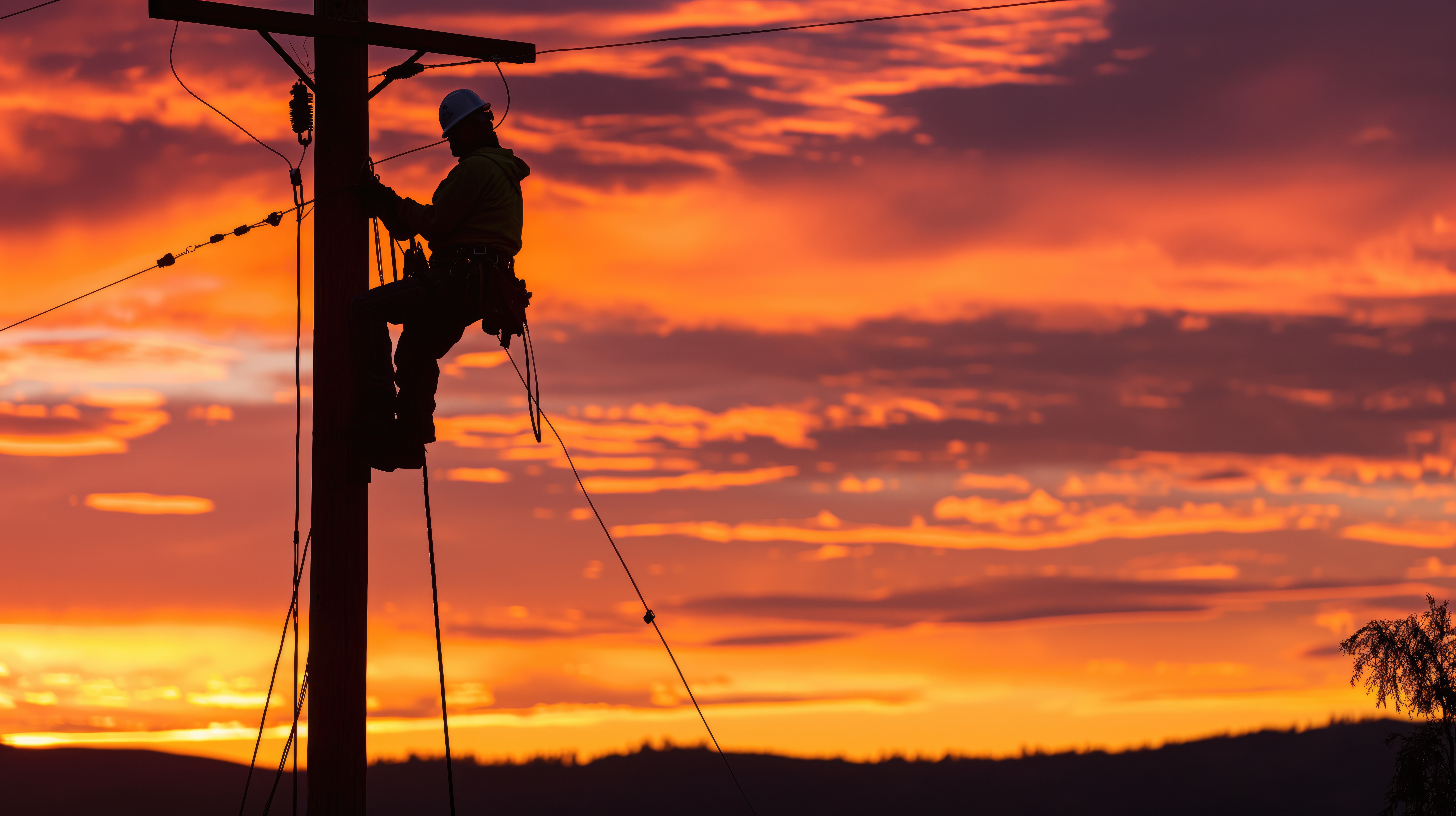
Lineworkers are essential to the electric power industry’s efforts to enhance and strengthen the energy grid. They play a key role in building, installing, and maintaining the critical energy infrastructure and smart grid technologies that are helping to reduce outage times and to keep customer bills as low as possible. They work around the clock and in dangerous conditions after hurricanes, wildfires, tornadoes, and other extreme weather events to restore power and hope to impacted communities.
Electric Perspectives spoke with five lineworkers who are members of IBEW Local chapters and who work for EEI member companies to learn more about the day-to-day realities of the trade. These highly skilled workers power our economy and our way of life, and we are grateful for their service.
Cody Preuss
Training the Next Generation
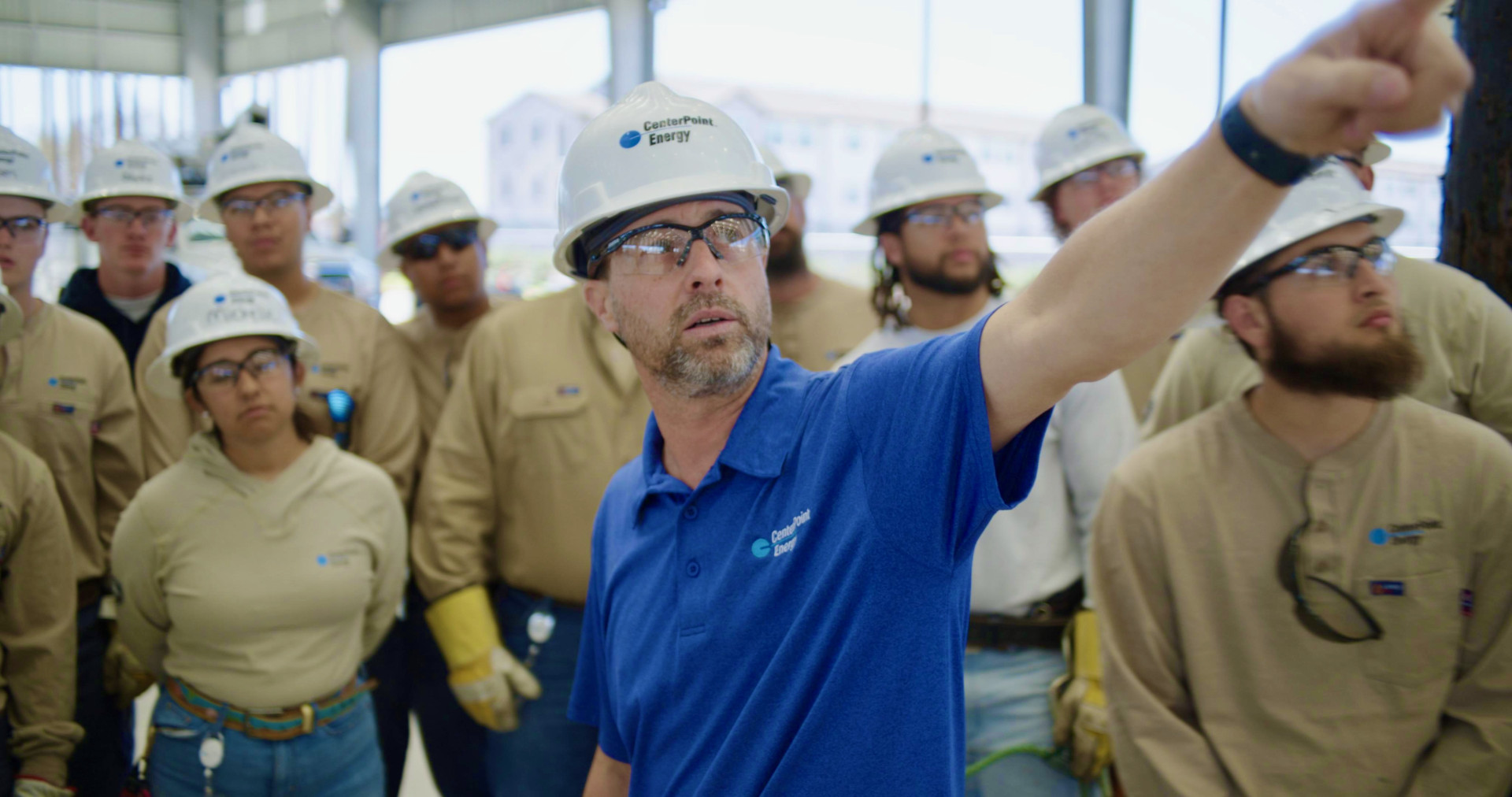
Cody Preuss, a member of IBEW Local 66, is a supervisor of technical training at CenterPoint Energy. He trains and organizes the next generation of lineworkers as they complete a three-year apprentice program to become journeymen lineworkers. About 50-100 apprentices are enrolled in the program at any given time.
“It’s double what we used to have. We’re trying to build our workforce in the next 6-8 years so we can have more qualified workers to serve our large customer base,” Preuss said. “Technology is evolving, and there is more demand because of the technology we are using in our homes. We need the electricity in these neighborhoods to stay up and running and be dependable.”
Working in the trade for CenterPoint Energy is something of a family tradition. Preuss’ grandfather was a pole truck operator and a truck driver for the company, and his father was a head journeyman, running construction crews for almost 40 years.
Preuss followed his family’s footsteps and joined CenterPoint Energy in 1998, where he spent his first two years working as an entry-level lineworker, or helper. After he completed his apprenticeship, became a journeyman lineworker, and worked for five years in Houston, Preuss advanced to the role of head journeymanand was charged with running construction crews.
As he became more involved with the trade’s safety and training programs, he transitioned to his current supervisor role to help others succeed in what he has found to be a rewarding career.
“Throughout the years, it has been very impressive to see how this company comes together for the community when bad things happen. Storms, hurricanes, tornadoes—and here in Texas, you have lightning storms that can really knock things out,” he said.
“When you are working those long hours, feeling worn out, but then you get to the end of it and see what everybody did collectively, it’s very humbling and very rewarding.”
Doing the job requires a particular skill set that takes years to master, along with the willingness to work long hours outdoors in challenging conditions. “Your body gets worn out, but you get that wind under your wings when you know your community is counting on you. That’s what has always been the most rewarding part of this job,” Preuss said.
The first steps to becoming a lineworker, Preuss advised, are understanding safety rules and how to communicate—not just with team members, but with the community. Lineworkers also should never stop learning.
“They have to be open, honest, and humble enough to know that they are not going to get to a point where they stop learning,” he said. “I still learn every day. I learn from people who have been here for five years, 10 years, 40 years. It doesn’t matter that I have been here for almost 28 years. Be open to the fact that you’re going to learn something from somebody, and you’ll have to keep it in your memory bank.”
Another piece of advice he gives to each apprentice: “Know that your attitude and your character are just as important as the physical skills you learn.”
Shannon Skinner
Crafting a Legacy
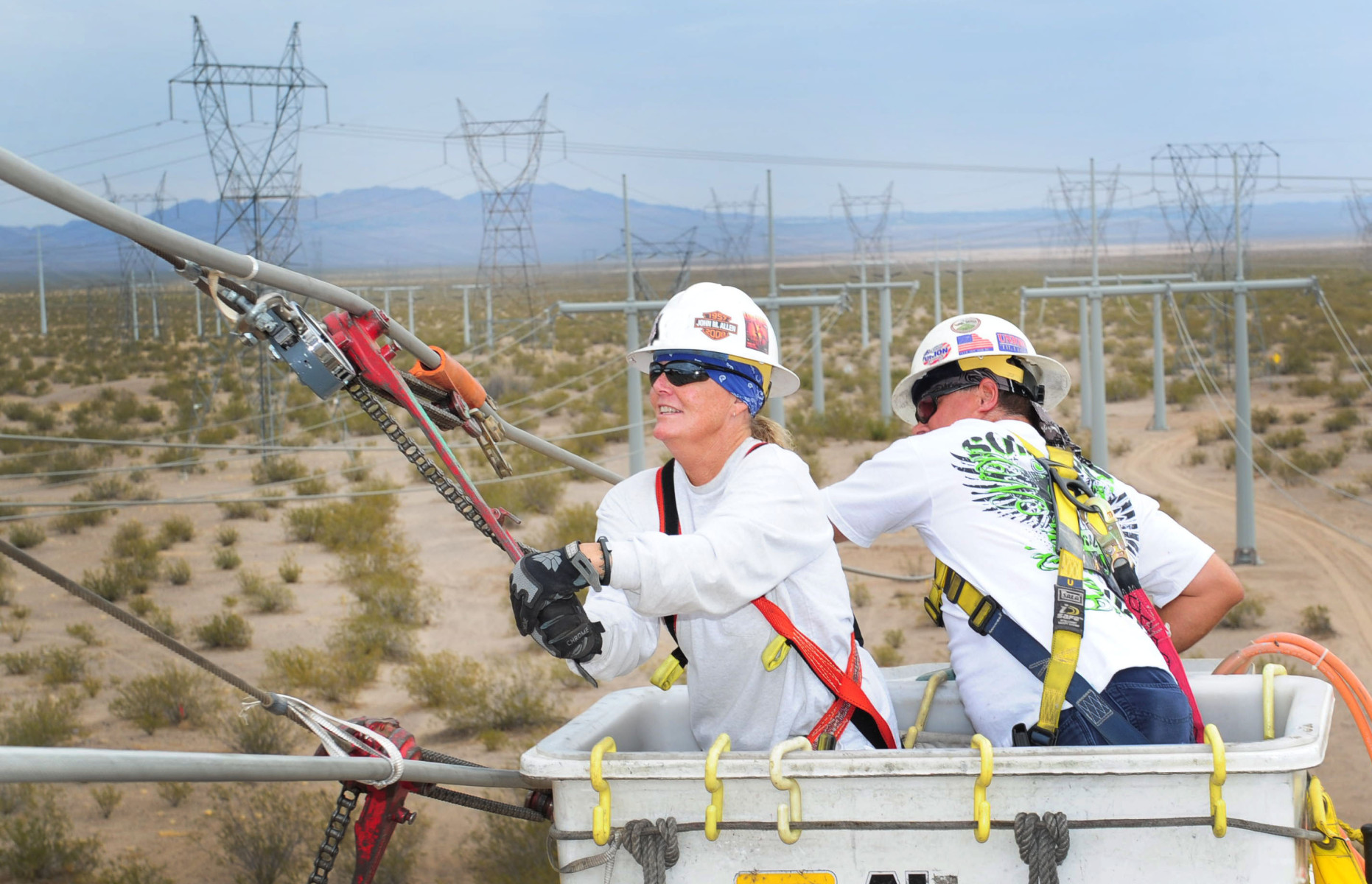
Shannon Skinner is a foreman and team lead at NV Energy, where she has worked since 1999. She also serves as president of IBEW Local 396.
Her stepfather and several uncles worked as lineworkers, so she decided to get a summer job sweeping floors at her local IBEW shop in high school. She went to college upon graduating, but the trade work called to her.
Skinner joined the IBEW and became a groundman. “That’s where I got the bug, working with everybody in different places and learning the trade. They were willing to teach me because I worked hard and I had a love for the trade,” she said.
If she was 18 years old and had to make a career choice, she says she would pick becoming a lineworker all over again, although missing out on holidays and family events has been a challenge.
Skinner emphasized the importance of the industry-labor partnership between EEI’s member companies and IBEW Local chapters. “We have a commitment to each other. We work together in the business and in the IBEW,” she said. “The communications that we have with each other make business and negotiations and a friendship go a lot further than an adversarial relationship.”
“We’re like a ginormous family here,” she added.
Skinner has been part of some difficult restorations, including an incident where three microbursts hit the Las Vegas area at once, toppling poles along the road. She says these experiences have made her team stronger.
“That’s the thing with lineworkers. You depend on each other and keep each other safe, period,” she said.
Despite the challenges, Skinner is passionate about her work.
“When you build something, you know it’s going to be there for decades. It’s awesome. And, you know it was your craftsmanship and your crew and your skills that put it together,” she said.
What’s even more rewarding is teaching the trade to the next generation.
“I love to teach what we do. People took time to teach me what to do, and they took a lot of pride in it. And, I do the same. I really enjoy teaching apprentices and younger lineworkers to become quality journeyman linemen,” she said.
Women from all over the country call her seeking mentorship, and she is excited to have seen more and more women joining the workforce during the last 15 years.
Like Preuss, Skinner’s biggest piece of advice to the next generation of lineworkers is to learn as much as possible: “They learn over the years, then pick their style of working and teach others. That’s how the trade has evolved for the last 130 years.”
David Berry
From Car Salesman to Crew Leader
A conversation that David Berry had while working as a car salesman changed the trajectory of his career. In the early 2000s, he sold a car to a Georgia Power lineworker, who told him about his work. “It interested me,” said Berry. “I didn’t mind being outdoors, and I knew it would be a good job. A dependable, stable job for my family.”
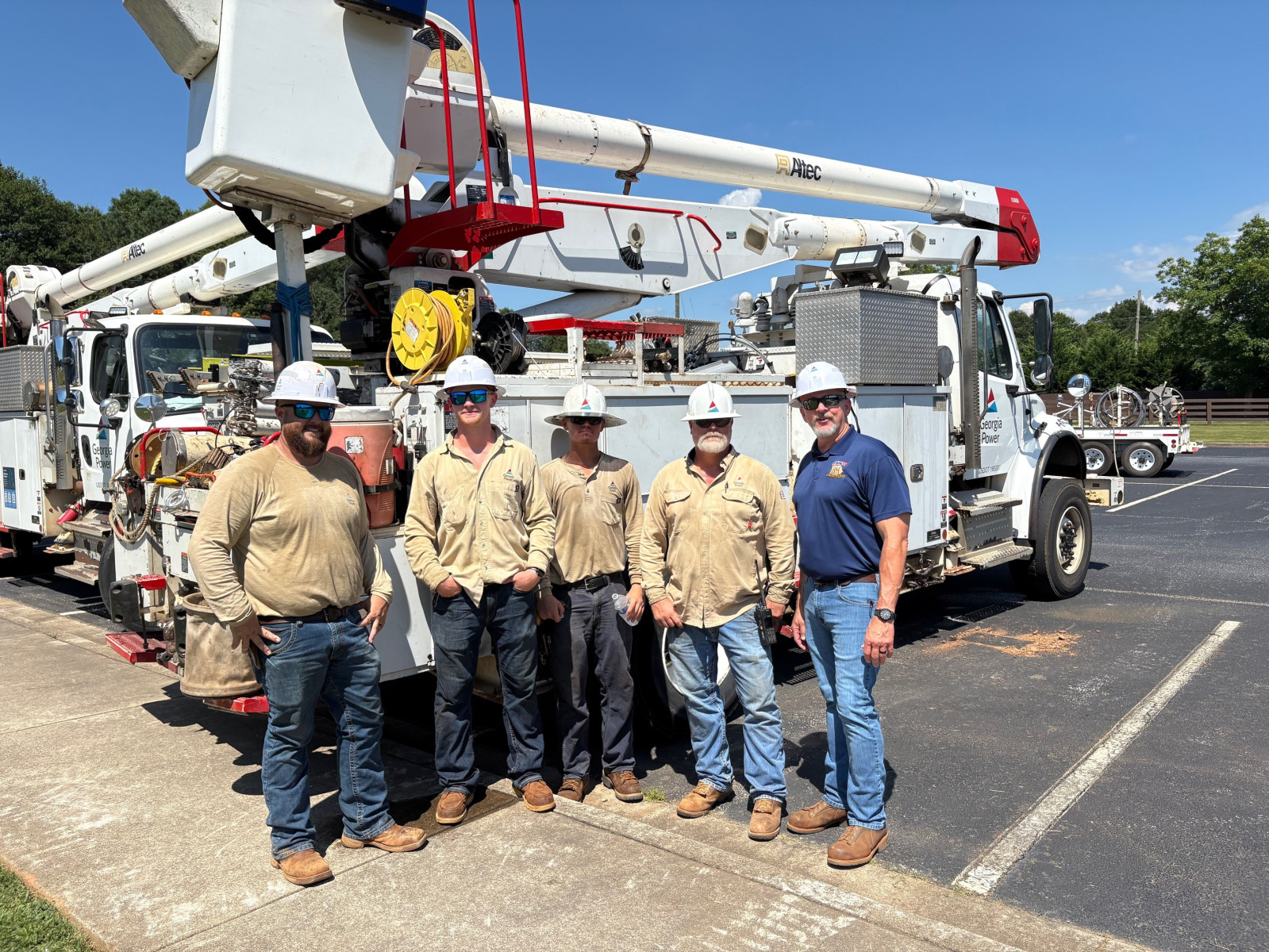
Berry began his career as a lineworker at Georgia Power in 2003, later becoming a crew leader. He now serves as the assistant business manager for IBEW Local 84.
Throughout his career, Berry has been no stranger to difficult power restoration and mutual assistance work. The first time he was part of a hurricane restoration response was for Hurricane Charley in 2004, which at the time was the strongest hurricane to hit the United States since Hurricane Andrew in 1992. He has responded to other major disasters, including Hurricane Katrina and the devastation caused last year by Hurricane Helene.
Berry spent 28 days working to restore power to those impacted by Helene, which was the most destructive storm in Georgia Power’s history. “I’ve seen the aftermath of different storms, but I have never seen that level of tree devastation. The trees were blocking the roads,” he said.
Berry believes the most important aspects of this restoration work—and any work that lineworkers do—are clear communication and safety. “It’s important to communicate clearly with the lineworkers to make sure no one is energizing a line while someone else is working on it,” he said.
Berry now trains journeymen, helping them find the same success that he did in the trade without incurring college debt.
“You build that camaraderie. You’re basically a family,” he said. “Some days are tough, but the skilled trades offer great pay and benefits, and it’s worth the effort. We’re an essential part of everybody’s lives. It’s a great career.”
“I would recommend it to anybody. Even somebody who was selling cars can build power lines and work on the grid. This is a lifelong skill, you can stay in your region or really travel the country,” he added.
Daniel Lofstrand and Steve Bentley
A Family Affair
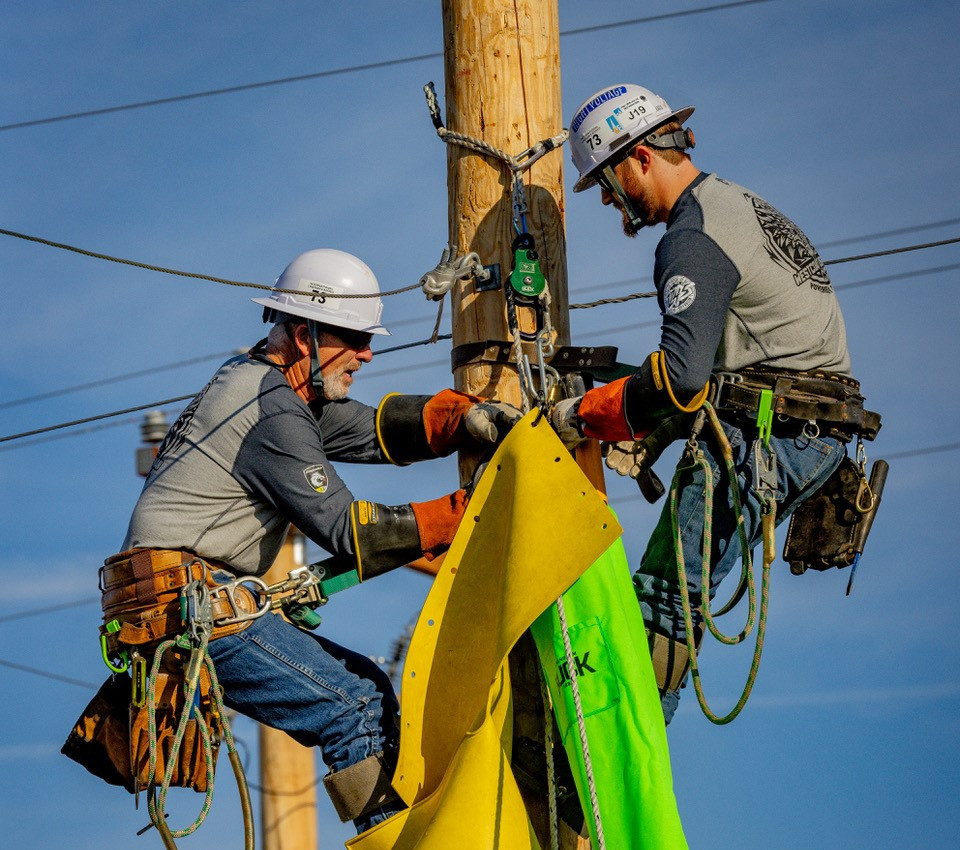
Lineworkers often refer to their crew members as family, but for Steve Bentley and Daniel Lofstrand, their profession truly is a family affair.
Bentley, who recently retired, was a journeyman lineworker for Pacific Gas & Electric (PG&E) and first became a member of IBEW Local 1245 more than 30 years ago.
His stepson, Lofstrand, followed in his stepfather’s footsteps after an initial career as a logger. “I always liked the outdoors and working hands-on,” Lofstrand said. “I saw what he did for a living and thought I would like it, too.”
Lofstrand started working for PG&E as an apprentice lineworker, and the stepfather-stepson duo worked together on occasion.
When asked if working together has changed their relationship, Lofstrand said, “It’s all the same. Even the guys we work with—we’ve spent so much time together. Everybody’s your brother.”
Lofstrand and Bentley put their teamwork to the test at the 40th Annual International Lineman’s Rodeo, hosted in October 2024 in Kansas City, Mo. This time-honored tradition allows lineworkers to showcase their skills and talents in a friendly and safe competition.
It was Bentley’s last rodeo before retirement. “The competition reminded me of how LeBron James is about to retire, but now his son gets to play,” Bentley said. Lofstrand notably disputed his stepfather’s comparison to LeBron James, but Bentley insisted the sentiment remains the same and that he is proud of the work that his stepson has put into honing his craft.
“He’s a hell of a lineman,” said Bentley. “He’s made his own way. I’m super proud that he went in this direction.”
If you’d like to learn more about notable PG&E lineworkers, check out PG&E’s profile of Willie Warren, the company’s first Black lineworker.
EEI, IBEW, NECA, and Pepco Holdings joined industry and labor leaders on Capitol Hill to commemorate National Lineworker Appreciation Day.